
How I Practice Authenticity in Small Moments.
Written after choosing to pause before replying to a message. Affirmation: “I practice authenticity in small moments.”
How I Practice Authenticity in Small Moments
I used to think authenticity required a dramatic turning point — a big speech, a brave confession, a visible decision that everyone would notice.
But my life has rarely changed through grand moments.
It has changed through quiet ones.
The truth is: my most honest choices usually happen when nobody is watching.
When I pause before replying.
When I admit I’m tired instead of pretending I’m fine.
When I stop trying to sound “cool” and start trying to sound like me.
Authenticity, for me, is not a performance. It’s a return.
A return to what I actually feel.
A return to what my body already knows.
A return to the simple inner voice that gets quieter every time I ignore it.
And that’s why I practice authenticity in small moments — because small moments are where I lose myself… and where I can find myself again.
I used to think being authentic meant always being confident. But real authenticity has never felt like confidence to me.
It has felt like softness. Like honesty. Like a quiet willingness to stay with myself.
It looks like saying no when something doesn’t feel right — even when I fear being misunderstood.
It looks like choosing comfort over performance — even when performance once felt like protection.
It looks like pausing mid-conversation, breathing, and choosing presence over reflex.
These choices don’t get applause.
But they do something more important: they rebuild trust between me and me.
Why Authenticity in Small Moments Truly Matters
Small moments are where patterns live.
Our biggest struggles don’t usually appear as one dramatic event — they appear as repeated tiny abandonments:
one swallowed feeling, one forced smile, one “yes” that should have been a “no,” one time we ignore the body’s signal to rest.
So the opposite is also true.
Healing doesn’t always arrive through one massive breakthrough.
It arrives when we stop betraying ourselves in quiet ways.
When I choose authenticity in small moments — canceling with grace, wearing what feels like me, pausing when I’m overwhelmed — I practice alignment.
And alignment is not a theory.
It is a sensation.
I can feel it in my breath.
When I’m aligned, my exhale is longer.
My shoulders drop without effort.
My stomach softens.
My voice becomes less careful.
When I’m not aligned, the body contracts.
The nervous system activates.
My mind gets faster, and my body gets smaller.
It’s subtle — but it’s real.
If this resonates with you, revisit
What I Believe, I Start to Embody,where belief meets behavior in quiet practice.
For more gentle reflections on authenticity, I recommend exploring
this guided meditation on Insight Timer, which beautifully illustrates how small pauses nurture real alignment.
“Authenticity whispers in habits, not headlines.”
Authenticity, the Nervous System, and the Body’s Truth
One thing I didn’t understand for years is that authenticity is not only emotional.
It’s neurological.
When the nervous system doesn’t feel safe, the body chooses strategies: people-pleasing, shrinking, over-explaining, performing calm, staying busy.
These are not personality flaws — they are protective responses.
That’s why sometimes it feels “hard” to be authentic.
Not because we don’t know the truth —
but because the body associates truth with risk.
So I stopped treating authenticity as a moral challenge and started treating it as a safety practice.
I asked:
What helps my nervous system stay regulated while I stay honest?
Sometimes the answer is breath.
Sometimes it’s slowing down.
Sometimes it’s sending a message later instead of now.
Sometimes it’s saying: “I need time to think.”
The small moment becomes a training ground:
I learn to stay real without flooding.
I learn to stay present without apologizing.
I learn to exist without performing.
How Breath Helps Me Stay Authentic
Breath is the quickest bridge between the mind and the body.
When I’m about to abandon myself — when I feel the urge to agree too quickly, to laugh too much, to explain too hard —
I check my exhale.
Because a short exhale often means my system is in mild threat mode.
The body is preparing to adapt.
So I do something simple and private:
I soften my belly.
I let the exhale lengthen.
I feel my feet.
I give myself two seconds of inner space.
Those two seconds often change everything.
They create enough room for honesty to appear — not as a fight, but as a clarity.
Authentic Small Actions That Shape Daily Life
Here’s what my everyday authenticity looks like — not as a perfect routine, but as a series of real-life choices:
I step away from a screen when my eyes feel tired, instead of forcing productivity.
I wear clothes that feel like me, not clothes that feel like performance.
I speak even when my voice wobbles — without rushing to sound “strong.”
I stop replying instantly.
I stop managing other people’s emotions as if they are my responsibility.
I allow myself to be quiet without feeling guilty about it.
I choose honesty with warmth.
Not harsh honesty.
Not dramatic honesty.
Just the kind that says:
this is what’s true for me right now.
These moments are imperfect — and that’s what makes them authentic.
They happen in the middle of the day, in conversations, in messages, in tiny decisions that nobody will remember…
except my nervous system.
Because the body remembers every time I stay with myself.
And it also remembers every time I leave.
When Authenticity Feels Scary (And What I Do Instead of Forcing It)
Some days, authenticity feels easy.
Other days, it feels like exposure.
When it feels scary, I don’t force it like a test.
I practice it in smaller doses.
I start with the body:
unclenching the jaw,
relaxing the shoulders,
breathing out slowly.
Then I choose one honest sentence — not ten explanations.
Something like:
“I can’t today.”
“I need more time.”
“That doesn’t feel right for me.”
“I’m not sure yet.”
I don’t push myself into a personality.
I build myself into safety.
Journal Prompt: Practicing Authenticity in Small Moments
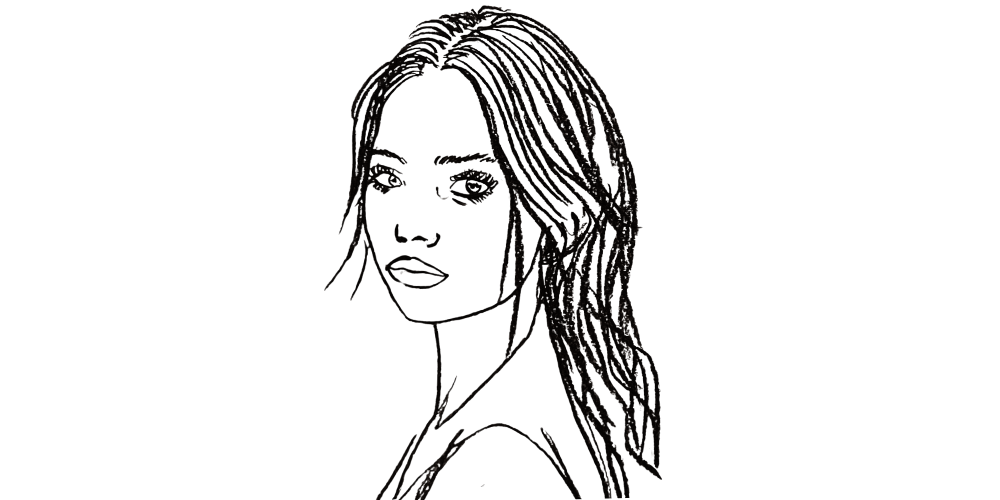
In your journal, write:
“One small moment today where I acted with authenticity is…”
Then go deeper, gently:
“What did my body feel like before I chose authenticity?”
“What changed in my breath after?”
“What would I like to practice tomorrow — one small step?”
For ideas that move beyond perfectionism into presence, explore my
Self-Discovery Journal Prompts,
which include prompts to value everyday realness over the dramatic.
Authenticity isn’t about declarations.
It’s about choosing again — every time —
in small moments that add up to a whole way of being.
And maybe that’s the most comforting part:
you don’t have to transform your entire life today.
You only have to return to yourself once —
in one small moment —
and let that be enough.