
How I Stay Soft in a Loud World.

Written at the dawn of a new month of presence. Affirmation:
“I can stay soft, even in a world that is loud.”
How I Stay Soft in a Loud World
The world can feel loud in a thousand invisible ways: notifications, deadlines, opinions, comparison, urgency, the pressure to “keep up,”
the feeling that you must always be available, always producing, always improving.
And when you live inside that noise for too long, your body starts to act like peace is unsafe — like calm is something you have to earn.
I used to think softness was something you either had or you didn’t — a personality trait, a fragile tendency, a risk.
But I’ve learned something gentler and more realistic:
softness is a practice.
It is not the absence of stress. It is the decision to return to yourself even while stress exists.
This article is not a call to become “calm” all the time.
It’s a slow, honest reflection on how I protect my tenderness without losing my truth —
using breath, boundaries, nervous-system care, and small daily rituals that keep me human.
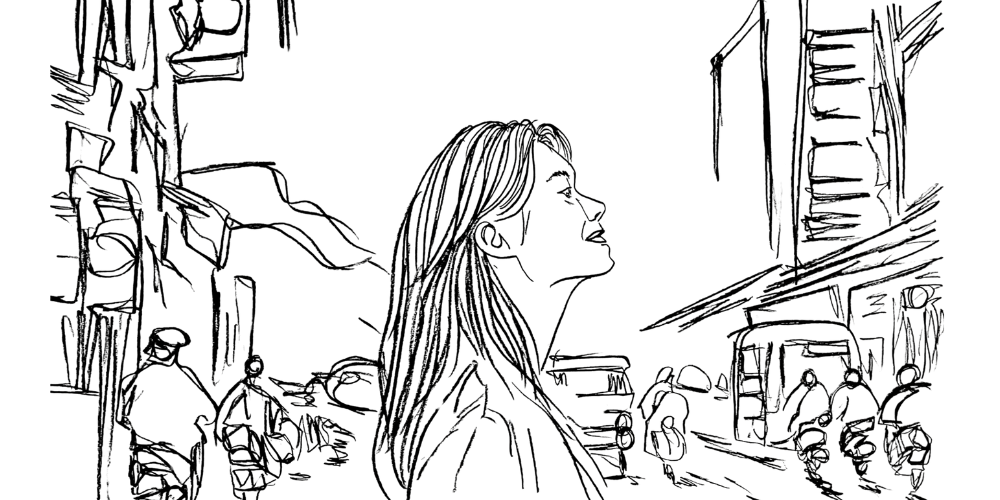
What “A Loud World” Really Does to the Body
Loudness isn’t only volume. Loudness can be speed. Interruptions. Uncertainty. Emotional demand.
And your body doesn’t always know the difference between a real threat and an emotional pressure.
It responds the same way: tightening, bracing, rushing, scanning.
When life stays loud, your nervous system can live in a subtle survival mode:
shallow breathing, tense shoulders, jaw clenching, restless thoughts, difficulty sleeping, irritability,
or that feeling of being “on” even when nothing is happening.
This is not weakness. This is biology.
In simple words: when your system doesn’t feel safe, softness feels risky.
Because softness requires openness — and openness requires a baseline of inner safety.
So the first step is not “be softer.”
The first step is: help the body feel safe enough to soften.
Why Softness Is Strength

For a long time, I confused softness with surrender.
I thought soft people were the ones who got hurt, got used, got overlooked.
So I tried to become sharper. Faster. Harder.
But hardness has a hidden cost: it disconnects you from your own signals.
Softness, when it is conscious, is not naïve.
It is not “letting everything in.”
It is the ability to keep your heart open and your boundaries clear.
A soft heart can still say no.
A gentle voice can still tell the truth.
A calm person can still be powerful.
Softness is strength because it is regulated — it is a nervous system that knows how to return to center.
“Softness is not the absence of strength — it is strength expressed with grace.”
How I Stay Soft: The 4 Anchors That Bring Me Back
When I’m pulled into noise, I don’t try to “win” against the world.
I return to anchors — simple actions that send one message to my body:
I’m here. I’m safe enough. I can slow down.
1) Breath: My Fastest Door Back to Myself
The breath is not a magic trick. It’s a signal.
When I breathe slowly, I’m not forcing calm —
I’m telling my nervous system: “We are not running. We are not being chased.”
On loud days, I do a very simple practice:
inhale gently through the nose, exhale longer than the inhale.
Not dramatic. Not perfect.
Just enough to soften the shoulders and unclench the jaw.
If you want a short guided practice (5 minutes), this Mindful.org breathing practice can help:
5-Minute Mindful Breathing Practice (Mindful.org)
.
2) Body: I Notice Before I Explain
Loudness often pulls us into the head: overthinking, replaying, anticipating, defending.
Softness begins when I return to the body and ask a quieter question:
What is my body doing right now?
- Shoulders: are they lifted like I’m bracing?
- Jaw: am I holding words I never said?
- Chest: tight, open, heavy, hollow?
- Breath: shallow and fast, or slow and deep?
This isn’t about diagnosing yourself.
It’s about returning to reality.
The body doesn’t lie — it simply reports.
And when you listen, you start responding with care instead of reacting with panic.
3) Boundaries: I Stop Absorbing What Isn’t Mine
Staying soft does not mean staying available.
Sometimes the softest thing you can do is step back.
Because constant exposure to noise (including emotional noise) makes the system rigid.
Here are boundaries that protect softness without turning you cold:
- Time boundary: “I can answer later.”
- Energy boundary: “I can care without carrying.”
- Access boundary: “Not everyone gets the full version of me.”
- Content boundary: “I don’t need to consume everything.”
A boundary is not rejection. It is nervous-system protection.
It says: “I want to stay kind — so I will stop overflowing.”
4) Rituals: Small Repetitions That Teach Safety
Your nervous system learns from repetition.
Not from inspiration.
Not from one perfect day.
From what you do again and again — especially when you’re tired.
On loud days, my rituals are simple:
drink water before coffee, open a window, write one honest sentence, step outside for two minutes, wash my face slowly.
Tiny actions, but they tell the body:
“We are not trapped. We can reset.”
If you want a gentle place to start, my internal resource can help:
Self-Discovery Journal Prompts.
Use it like a soft companion, not like homework.
Practices That Keep Me Soft

Softness lives in details — in how I respond to myself when I’m overwhelmed,
in how I slow down before I speak,
in how I choose kindness without abandoning honesty.
Here are practices I return to when the world feels too loud:
Practice A: “One-Minute Return”
I set a timer for one minute.
I place one hand on my chest or belly.
I breathe out slowly.
I let my face soften.
I ask: What do I need right now to feel 5% safer?
(Not 100%. Just 5%.)
Practice B: “Name the Noise”
Noise becomes louder when it’s vague.
So I name it with clarity:
“I’m overstimulated.”
“I’m carrying too much.”
“I’m afraid of disappointing people.”
“I’m comparing my life.”
Naming is not complaining. Naming is orientation.
Practice C: “Soft Truth”
Softness is not silence.
Sometimes softness is saying one honest sentence:
“I can’t do this today.”
“I need time.”
“I hear you, and I’m not available for this conversation right now.”
Truth said softly is still truth.
If you want more reflections like this, you can also browse the rest of my writing on the
Mibosma blog.
Journal Prompt: Staying Soft in a Loud World

In your journal, write slowly (no pressure, no perfect words):
- Where does the world feel loud in my body?
- What do I usually do to protect myself? (shut down, overthink, people-please, rush, avoid…)
- What would “soft protection” look like? (a boundary, a pause, a quieter morning, less input…)
- One small act of gentleness I can repeat daily is…
If you want guidance and structured prompts, use:
Self-Discovery Journal Prompts.
Think of it as a hand to hold — not a task to finish.
Softness Is Also Self-Compassion
Sometimes the loudest voice isn’t outside — it’s inside.
The inner critic can be the harshest sound in the room.
That’s why softness must include the way you speak to yourself.
A practical and very gentle resource that many people find helpful is Kristin Neff’s “Self-Compassion Break”:
Exercise: Self-Compassion Break (Self-Compassion.org)
.
It’s short, human, and grounded — especially when emotions feel heavy.
FAQ: Staying Soft Without Getting Hurt
Does staying soft mean I should tolerate everything?
No. Softness without boundaries becomes self-abandonment.
The goal is not to stay open to harm — the goal is to stay connected to yourself while choosing safety.
What if my softness makes people take advantage of me?
Then your softness needs structure.
Softness is the heart.
Boundaries are the bones.
Together, they create a self that is kind and protected.
What if I feel numb instead of soft?
Numbness can be a sign of overload.
Instead of forcing softness, start with regulation:
rest, reduce input, breathe slower, eat, drink water, step outside, talk to one safe person.
Softness often returns after safety returns.
A Soft Closing
I don’t stay soft because life is easy.
I stay soft because life is real.
And I want to live it without becoming hard, cynical, or disconnected.
Softness is my way of staying human in a world that tries to turn everything into urgency.
It is presence.
It is nervous-system care.
It is choosing truth without violence.
It is letting my heart stay open — while my boundaries stay clear.
If you want a gentle next step, begin here:
Self-Discovery Journal Prompts
— and choose one small act of softness you can repeat this week.
Softness doesn’t mean I don’t feel the noise.
It means I remember where my home is — inside me.