
The Thought That Changed Everything: From Overthinking to Inner Peace
Overthinking and inner peace — can they really exist together?
If your mind feels constantly busy, heavy, or restless, you may believe that peace is only possible when thoughts disappear.
I used to believe that too.
I thought inner peace was something that happened when the mind finally became quiet.
When doubts stopped. When questions ended. When I “fixed” myself enough.
But one discovery slowly changed everything: maybe the problem is not the thoughts themselves,
but the way we relate to them.
This article is not about “stopping” your mind.
It is about understanding it.
Softening your relationship with it.
And discovering that inner peace does not begin when thinking ends —
it begins when resistance ends.
That Inner Voice That Attacks You First
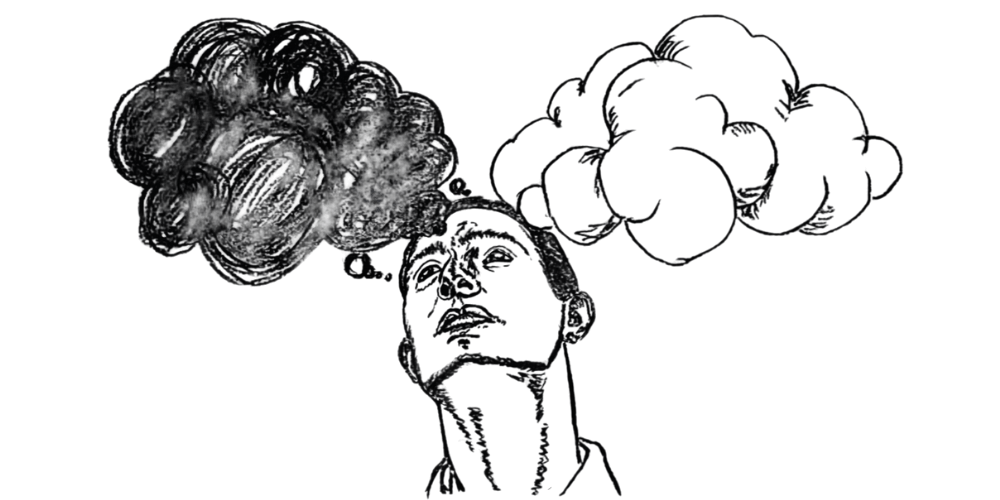
Most of us know this voice.
The one that replays the past.
Questions every decision.
Anticipates every possible mistake.
Measures us against others.
It comments before we even finish a thought.
It warns. It criticizes. It predicts. It doubts.
It rarely rests.
Overthinking rarely feels like “thinking.”
It feels like being pulled.
Dragged from one mental scene to another.
And the more we fight it, the stronger it becomes.
This inner voice is not an enemy.
It is a protective mechanism.
A survival habit.
A part of the nervous system trying to control uncertainty, pain, and the unknown.
But when it dominates, we stop living experience —
and start living commentary.
We are no longer in the moment.
We are in interpretation.
The Cost of Mental Loops

Overthinking consumes energy.
Not physical effort — emotional effort.
The body stays in subtle alert mode.
The nervous system rarely rests.
Even in silence, the mind continues working.
Over time, this inner activity shows up physically:
tension, shallow breathing, fatigue, headaches, insomnia, and emotional numbness.
Mental loops drain our energy.
We analyze, replay, and worry until we’re exhausted.
Eventually, the body speaks — through tension, sleep problems, or emotional fatigue.
Scientific research
confirms that chronic stress can damage overall well-being.
Mental loops are not harmless.
Repetitive negative thinking is closely linked to emotional exhaustion,
reduced psychological well-being, and difficulty regulating emotions.
The mind cannot clearly separate imagined threats from real ones —
the body reacts to both.
The real problem is not that thoughts appear.
The real problem is when we believe every thought is us.
When identity merges with thinking, peace feels impossible.
The goal is not to eliminate thoughts,
but to see them without identifying with them.
From Struggle to Stillness

Thoughts are part of the nervous system.
They inform. They protect. They remember.
Ignoring them does not work.
Fighting them strengthens them.
Suppressing them often makes them louder.
What changes everything is relationship.
Instead of asking, “How do I stop thinking?”
the question becomes:
“How do I observe without being carried?”
This shift is subtle — but powerful.
It moves you from being inside every thought,
to standing in awareness of thought.
I began practicing three simple changes:
- Observation: noticing thoughts instead of arguing with them.
- Questioning: gently examining whether every thought is true.
- Embodiment: returning attention to breath, sensations, and space.
I used reflective questioning, slow breathing, and emotional writing.
These practices slowly weakened identification.
They didn’t silence my mind —
they created space around it.
If you want gentle support for this, you can explore:
my free tools for clarity and grounding.
Why Awareness Changes Overthinking
Awareness does not argue with thoughts.
It sees them.
When awareness grows, something unexpected happens:
thoughts continue —
but they no longer occupy the whole inner space.
There is room for breath.
Room for sensation.
Room for silence between thoughts.
Overthinking loses its emotional charge when it is no longer believed automatically.
The mind still speaks —
but it no longer decides who you are.
What Inner Peace Actually Is (And Isn’t)
Inner peace is not emptiness.
It is not silence.
It is not constant calm.
Inner peace is the ability to experience thought without drowning in it.
It is space around emotion.
Gentleness with reaction.
Presence even when the mind is active.
Overthinking and inner peace can coexist —
when awareness becomes stronger than narrative.
A Simple Practice for Overthinking
Try this for a few minutes:
- Notice a thought.
- Instead of finishing it, feel your breathing.
- Notice that a thought appeared… and disappeared.
- Notice what remains when it passes.
That remaining presence is not created.
It is revealed.
This is not controlling the mind.
This is remembering you are more than it.
Final Reflection

Clarity doesn’t mean emptiness.
It means peace with what is.
Your thoughts, reactions, and fears are not obstacles.
They are expressions.
They are parts of a nervous system trying to protect you.
The more you allow them without merging with them,
the more space appears.
Like a flower opening after rain,
you don’t become someone else.
You become less tight.
Less divided.
Less afraid of your own inner world.
Overthinking does not disappear.
But suffering does.
And that is where inner peace truly begins.