Why You Never Feel at Peace (And How to Create Inner Space Instead)
Peace is not silence… it is the space that allows everything to pass without staying.
Peace Feels Like Space, Not Emptiness
There was a time when my life felt constantly full. Not full in a fulfilling way, but full in a way that left no space to breathe. Work, responsibilities, thoughts that didn’t stop… everything seemed to occupy every part of my day.
From time to time, I would leave everything behind and go out into nature. I believed that peace could be found there, far from people, far from noise, far from everything that felt overwhelming.
On the road I used to take toward the forest, there was an old potter. He was known in the village for the beauty of his work. His pieces were simple, but there was something about them that felt calm, almost alive.
At first, I imagined that his life must be quiet and peaceful, far from everything. But that was not the case. He lived near a busy road where carts passed all day. His neighbors argued often, and his own home was filled with the noise of children. Nothing about his environment was silent.
One day, after feeling particularly overwhelmed, I stopped to speak with him. I told him how beautiful his place felt to me, how it seemed peaceful, almost empty in a way that brought calm. I told him that I had always believed that peace came from distance, from silence, from being away from everything.
He smiled gently and invited me into his workshop. Without saying much, he took a block of clay and placed it in front of me.
“Look at this,” he said. “It is full. Dense. If I leave it like this, it has no purpose. It is just a mass.”
Then he began to shape it. Slowly, carefully, he pressed his hands into the clay and started to hollow it out, forming the shape of a vase.
“Peace is not this solid block,” he continued. “And it is not the emptiness outside either. Peace is the space I create inside.”
He showed me the inside of the vase.
“Without this space, the vase cannot hold anything. It cannot receive water, flowers, or anything of value. It remains just a piece of clay. But when there is space inside, it becomes useful. It becomes alive.”
As he placed the vase on a shelf, a noisy cart passed outside. The sound filled the room for a moment, then faded.
He looked at me and said, “Peace is not the absence of that noise. It is the ability to have enough space within yourself so that it passes through without filling you.”
I never forgot what he told me that day. I realized that peace is not something you find by escaping your life. It is something you create within it. Not by removing everything, but by making enough space inside yourself to allow life to exist without overwhelming you.
This Is Not About One Story
What he showed me that day did not stay in his workshop. It followed me long after I left, because I began to see it everywhere—not only in my own life, but in the way many people experience what they call “peace.”
We often believe that peace is something we find outside of our daily lives. We imagine it as distance, silence, or emptiness—something that exists far from noise, far from responsibility, far from everything that feels overwhelming. And so, we try to move toward that image. We seek quiet places, we take breaks, we try to step away, even if only for a moment.
But the feeling doesn’t always last. As soon as we return, the same thoughts, the same pressure, the same inner noise comes back. And that is often when confusion begins. If peace is supposed to come from silence, why does it disappear so quickly?
The answer is not always where we expect it to be. Because what we are looking for is not the absence of life, but a different way of experiencing it. And without realizing it, we keep searching for something outside, while the real shift needs to happen inside.
This is why that simple image of the vase stayed with me. It wasn’t about the quiet of the forest, or the noise of the road. It was about space—an inner space that allows everything to exist without becoming overwhelming.
Where This Confusion Comes From
This confusion does not appear randomly. It builds over time, in the way we experience stress, noise, and pressure in our daily lives. When everything feels too full—too many thoughts, too many responsibilities, too much stimulation—it becomes natural to associate peace with the opposite of all that.
We begin to imagine peace as something empty, something quiet, something distant. Not because it is truly what peace is, but because it feels like relief from what we are experiencing. In that moment, emptiness seems like the only solution to overwhelm.
This is why many people believe that peace can only exist far from life—away from noise, away from people, away from everything that creates movement. But this idea comes from exhaustion, not from understanding.
When your mind is constantly active, what it wants is not necessarily emptiness, but rest. And rest is not the same as absence. It is not about removing everything—it is about creating enough space so that everything does not collapse on top of you.
This is where the misunderstanding happens. We don’t lack silence as much as we lack space within ourselves. And without that space, even the quietest place can still feel heavy.
Why Peace Doesn’t Last (Even When You Find Silence)
Many people experience this without fully understanding it. They step away from their daily life, go somewhere quiet, spend time in nature, and for a moment, everything feels lighter. Their thoughts slow down, their body relaxes, and there is a sense of calm that feels real.
But when they return, that calm does not stay. The same thoughts come back, the same tension reappears, and the same feeling of pressure slowly builds again. And it can feel confusing. If peace was real in that moment, why does it disappear so easily?
The answer is not in the place—it is in the state of the system. When your mind and body are used to constant stimulation, they don’t automatically reset just because the environment becomes quiet. The external silence may be there, but the internal activity continues.
This is closely connected to how stress works in the body. When the system stays activated for too long, it becomes difficult to return to a calm state, even in peaceful environments. This process is explained in this Cleveland Clinic article on how stress affects the body, where ongoing activation can continue even when external conditions change.
This is why peace does not last when it depends only on where you are. Because what creates the experience is not only the environment, but the space you are able to create within it.
And without that inner space, even silence can feel temporary. It gives relief, but it does not transform the way you experience what comes next.
What Real Peace Actually Is
Real peace is often misunderstood because we try to define it by what is missing—no noise, no stress, no movement. But peace is not defined by absence. It is defined by presence.
It is not about removing everything from your life. It is about changing the way your inner space holds what is already there. The noise may still exist, responsibilities may still be present, and life may continue with all its movement—but the way it is experienced begins to shift.
Peace is not a place you go to. It is a space you create.
Just like the vase the potter showed me, its value was not in the clay itself, but in the space it held inside. Without that space, it could not receive anything. It could not serve any purpose. It was simply full, but not useful.
In the same way, when your inner space is too full—filled with thoughts, reactions, and constant engagement—everything feels heavier than it needs to be. Not because life is heavier, but because there is no space for it to pass through.
Real peace begins when you allow that space to exist within you. Not by forcing silence, but by reducing the need to hold everything, to react to everything, or to control everything.
It is a subtle shift. You still hear the noise, but it doesn’t stay. You still experience pressure, but it doesn’t define you. You still live your life fully, but you are no longer overwhelmed by it.
And that is the difference. Peace is not emptiness—it is the ability to have enough space inside so that life can move without closing you.
How to Create That Inner Space
Creating inner space is not something you do once and keep forever. It is something you allow, again and again, in small moments that slowly change how you experience your day.
It doesn’t require you to remove everything that feels overwhelming. It begins by noticing when you are holding more than you need to. When your mind is reacting to everything, when you are trying to solve everything at once, or when you feel the need to stay constantly engaged.
In those moments, the shift is not to escape, but to soften your involvement. To allow things to be present without taking them entirely inside you.
This can start in very simple ways. A pause before responding. A breath that is not controlled, but simply noticed. A moment where you step back mentally, even if your body remains in the same place.
It is not about doing nothing. It is about doing less inside. Less holding, less reacting, less trying to manage everything at once.
Over time, these small shifts begin to create space. And that space changes how everything feels—not because life becomes easier, but because you are no longer carrying it in the same way.
This is how inner space is created. Not by removing life, but by changing the way you stay within it.
Journaling — A Way to Create Space Inside
After understanding that peace is not something you find outside, but something you create within, the next question becomes simple: how do you begin to notice what is filling your inner space?
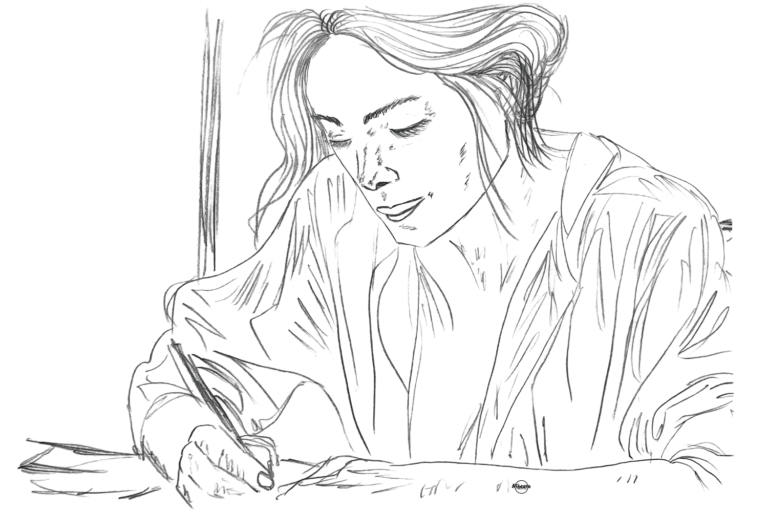
Writing can become one of the most direct ways to see it clearly. Not because it gives immediate answers, but because it slows everything down just enough for you to recognize what is already there.
Most of the time, what fills the mind is not one clear thought, but many small ones layered together—unfinished reflections, reactions that stayed, emotions that were never fully expressed. When they remain unspoken, they continue to occupy space.
Journaling allows you to bring those layers out, one by one. Not to analyze them deeply, and not to fix them, but simply to separate them from you. When something is written, it is no longer held in the same way.
You don’t need a structure to begin. You can start with simple questions: What has been staying in my mind longer than it needs to? What am I holding onto without realizing it? What feels heavier than it should?
If you find it difficult to stay with your thoughts or if everything feels mixed together, you can use these Self-Discovery Journal Prompts as a gentle way to guide your reflection. Not to direct your answers, but to help you remain present with what you are feeling.
Over time, this practice does not remove what is there. It creates space around it. And in that space, your experience begins to feel different—lighter, clearer, and less overwhelming.
Real Questions From Real People
“Why do I only feel peaceful when everything is quiet?”
Because your system is used to constant stimulation, silence feels like relief. When external noise stops, your mind finally has a moment to slow down, and that creates the impression that peace comes from quiet environments. But what you are experiencing is a temporary reduction of input, not a lasting change in how your inner space works.
Simple way to begin: Instead of searching for silence, try to notice how you respond to small moments of noise without reacting immediately. This helps you build space even when things are not quiet.
“Why does peace disappear as soon as I return to my normal life?”
Because the environment changes, but your internal patterns remain the same. If your mind is used to reacting quickly, holding thoughts, and staying engaged, it will return to that state as soon as you are back in your routine. Peace that depends only on where you are cannot stay when your surroundings change.
Simple way to begin: Focus on creating small pauses during your day, not only when you are away from everything, but while you are inside your usual environment.
“Is peace supposed to feel empty?”
No. Peace is often confused with emptiness because both feel different from overwhelm. But emptiness is a lack of engagement, while peace is a presence with space. You are still aware, still connected, but not filled to the point of pressure.
Simple way to begin: When you feel calm, notice if you are present or disconnected. Real peace keeps you present, not absent.
“How do I create space in my mind when it feels too full?”
Trying to empty your mind usually creates more tension. Space is not created by forcing thoughts to disappear, but by allowing them to pass without holding onto each one. When you stop engaging with every thought, your mind naturally begins to feel less crowded.
Simple way to begin: When a thought appears, notice it, but do not follow it immediately. Let it exist without turning it into a chain of reactions.
“Why do I feel overwhelmed even when nothing serious is happening?”
Because overwhelm does not only come from events, but from accumulation. Small tensions, repeated thoughts, and constant attention build over time. Even when nothing urgent is happening, your system can still be carrying what has not been released.
Simple way to begin: Pay attention to what stays in your mind longer than it needs to. Not everything requires your continued attention.
“Can I feel peace while my life is still busy?”
Yes. Real peace is not dependent on a quiet life. It comes from the space you create within your experience of that life. Activity and calm are not opposites. When there is enough inner space, both can exist at the same time without creating pressure.
Simple way to begin: Notice one moment in your day where you are active, but not mentally rushing. That is where peace begins to exist within movement.
“I just realized I’ve never really been at peace in my life. I’ve never truly relaxed. How do I move past that?”
This realization can feel heavy at first, not because something is wrong with you, but because you are seeing something clearly for the first time. When your system has been used to constant activity or tension, peace can feel unfamiliar, even distant. But this does not mean it is out of reach. It only means it hasn’t been practiced yet.
Simple way to begin: Instead of trying to feel “fully at peace,” start by noticing small moments where nothing is wrong. Stay with those moments a little longer than usual. This is how your system slowly learns a different state.
“How do I become at peace with myself knowing I can’t have everything I wanted in life?”
Peace does not come from having everything. It comes from how you relate to what is already here. The difficulty often comes from holding onto an image of what life should have been, instead of allowing yourself to experience what it is now. Letting go of that expectation is not giving up—it is creating space for a different kind of acceptance.
Simple way to begin: Shift your attention from what is missing to what is present. Not as a forced positive thought, but as a way to reconnect with what still exists in your life.
“Life does not owe you peace. How can we embrace the chaos around us?”
Chaos becomes overwhelming when we try to control it or resist it completely. Embracing it does not mean liking it, but allowing it to exist without letting it define your entire experience. Peace is not the removal of chaos—it is the space that prevents chaos from taking over everything inside you.
Simple way to begin: When something feels chaotic, focus on one small element you can stay grounded in—a breath, a physical sensation, or a simple action. This creates a point of stability within movement.
“I enjoy doing nothing and feeling peaceful. Why does it seem to irritate other people?”
Because your stillness may reflect something they are not comfortable with in themselves. When someone is used to constant activity, seeing calm can feel unfamiliar or even unsettling. Their reaction is not about your peace—it is about their relationship with it.
Simple way to begin: Allow your calm to exist without needing to explain or justify it. Not everyone will understand it, and that is okay.
“Is it normal to feel most at peace when I am alone?”
Yes, especially if your inner space feels clearer when external input is reduced. Being alone removes many layers of stimulation, making it easier to feel that sense of space. But over time, peace can also exist in the presence of others, once that inner space becomes more stable.
Simple way to begin: Notice what makes you feel at ease when you are alone, and slowly bring small parts of that into shared environments.
“How do I make peace with an uncomfortable truth that my mind struggles to accept?”
The difficulty often comes from trying to force acceptance too quickly. When something feels uncomfortable, your mind naturally resists it. Peace with that truth does not come from agreement—it comes from allowing it to exist without constant internal conflict.
Simple way to begin: Instead of asking yourself to accept it fully, start by saying: “This is what is here right now.” Stay with that without pushing it away or trying to solve it immediately.
Final Reflection
For a long time, I believed that peace was something I had to find somewhere else. In silence, in distance, in moments where nothing was happening. I thought that if I could just step away from everything, I would finally feel calm.
But what I understood, slowly, is that peace was never about removing life. It was about how I was holding it.
The noise did not need to disappear. The movement did not need to stop. What needed to change was the space inside me—the space that allows things to pass without staying, to exist without taking over everything.
That is why peace can feel so close, yet so difficult to keep. Because it is not something you find once. It is something you create, in the way you respond, in the way you pause, in the way you stop holding more than you need.
And maybe that is what the potter was showing me without saying it directly. That a life without noise is not the goal. A life with space inside it is.
Because peace is not emptiness. It is the quiet space within you that lets everything exist… without losing yourself inside it.