Why You’re Not Meant to Be Always “On” (And How to Create Space to Breathe)
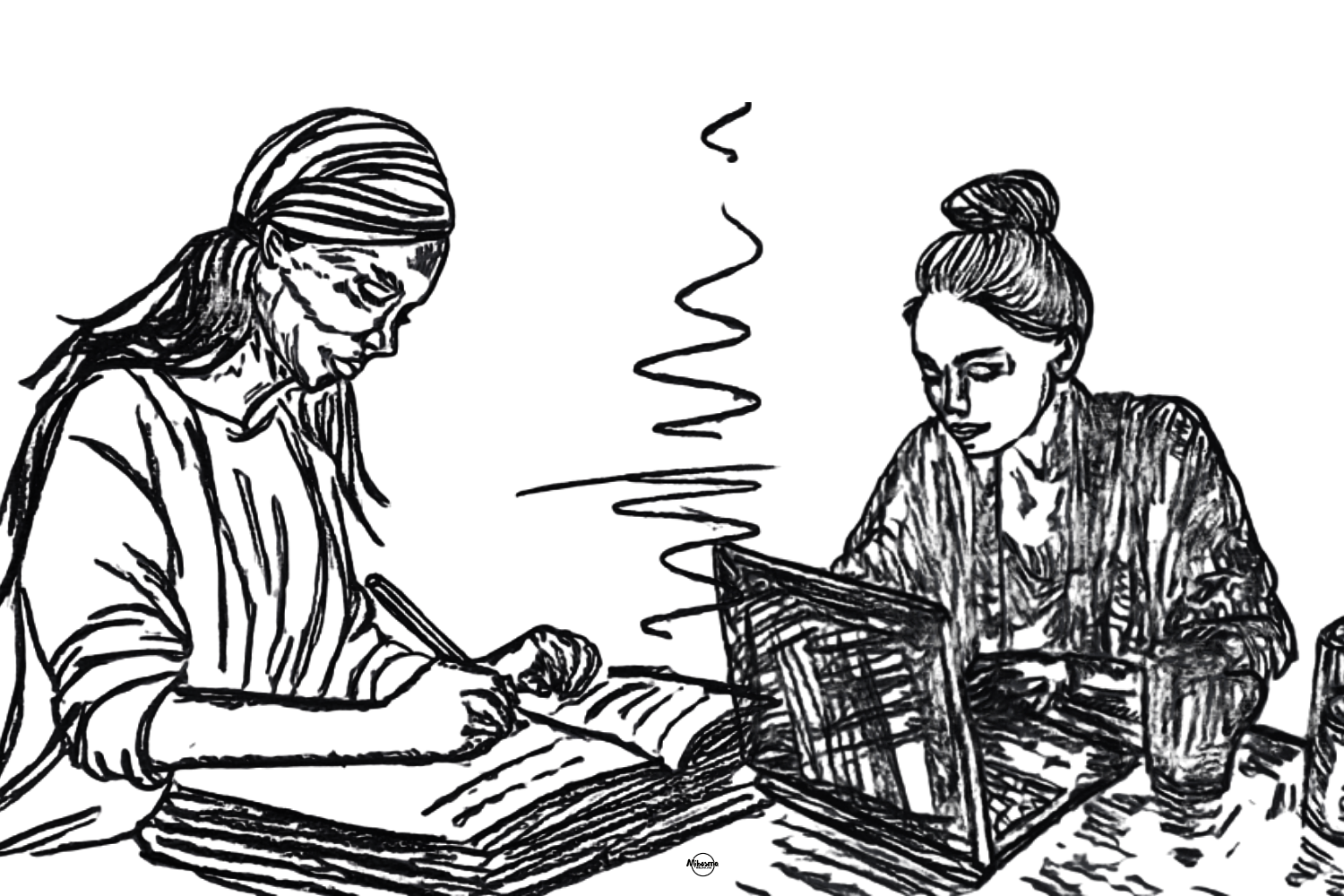
One part of you slows down… while another keeps everything running.
Why You’re Not Meant to Be Always “On” (And How to Create Space to Breathe)
This morning, someone told me they were tired—but not the kind of tired you can easily explain. They weren’t speaking like someone looking for a quick solution or simple advice. They were speaking like someone who had gone too far inside themselves, to the point where they no longer knew how to come back. They said they weren’t doing anything particularly difficult in their day, nothing extraordinary, and yet they had this constant feeling of never really stopping, as if something inside them kept going even when everything around them was quiet.
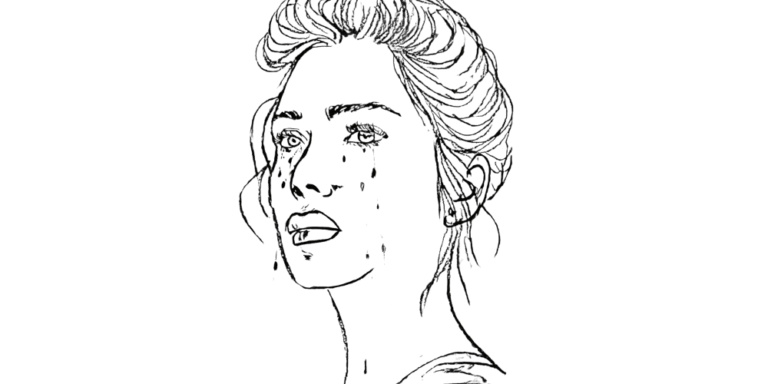
As I listened, what stayed with me wasn’t just the words, but the way they were carried. There was something very quiet about this exhaustion—almost invisible, yet deeply present. The face in front of me looked calm, without any obvious tension, and yet it felt empty from the inside. As if the body was there… but the energy had stayed somewhere else, caught in a movement that never really stops.
I didn’t interrupt. I let the moment finish itself. After a few seconds, the eyes slowly moved toward a painting on the wall. It was almost entirely dark, nearly all black, with just a small opening of light—a quiet sunset, barely visible within it.
I gently asked if it felt beautiful. The answer came simply: no… it felt sad. I didn’t try to change that. I just invited another look—not to think differently, but to notice where the eyes had gone first. There was a pause. Then a quiet realization: despite all the darkness, it was the light that had been seen first.
And something softened in that moment. Not a solution. Not a clear answer. Just a quiet shift. Because even surrounded by heaviness, even inside something constant and exhausting, there was still a part reaching for something calmer, something lighter.
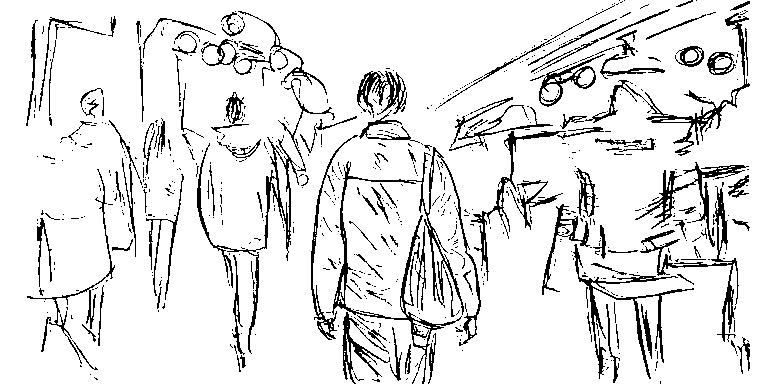
It’s not life itself that exhausts us. It’s the fact that we never step out of it. We stay inside the movement—thinking, managing, anticipating—without ever creating distance. And over time, it’s not what we do that drains us… it’s the fact that we never leave that state.
This Kind of Exhaustion Is Hard to Explain
Maybe you know this kind of exhaustion too. Not the kind that comes from the body, not the kind that fades after a good night’s sleep, but something quieter and harder to name—something that stays even when everything around you slows down. You sit, you rest, you try to do nothing, and yet your mind keeps moving. Thoughts continue, reactions form, something inside you remains active, as if it never fully steps out of the movement.
You try to slow down, not in a dramatic way, just a little, just enough to breathe, but you notice that even in those moments, you’re still inside it. Still thinking, still anticipating, still slightly tense without knowing why. And over time, this becomes so familiar that you stop questioning it. You stop remembering what it feels like to truly switch off—not just physically, but from the inside. You rest… but you don’t return.
Where This Comes From (And Why It Feels So Constant)
This is not something you consciously chose. It’s something you learned, slowly, almost without noticing, through small moments that seemed normal at the time. Wanting to do things well, wanting to keep up, wanting not to fall behind—these intentions shaped the way your mind began to operate. Over time, it learned to stay active, to stay ready, to stay alert, as if being constantly engaged was the only way to keep everything under control.
At first, this way of functioning helped you. It made you more responsive, more aware, more capable of adapting to what was around you. But what once supported you didn’t know how to stop. It continued, even when there was no urgency, even when nothing was asking anything from you. Over time, your nervous system held on to that state and began to treat it as normal, a pattern that has been widely observed and explained, including in this Cleveland Clinic article on how stress affects the body. And now, even in quiet moments, even when everything around you is still, something inside you keeps going—not loudly, not aggressively, just constantly, as if it forgot how to return to rest.
Why Rest Doesn’t Feel Like Rest Anymore
Your body stops, but your system doesn’t. You lie down, and your mind keeps moving. You take a break, and something in you is already anticipating what comes next. You breathe, but there is still a subtle effort, a quiet need to control, to stay aware, to not fully let go.
So even in moments that are meant to be restful, you never fully return to yourself. You pause, but you don’t settle. You stop, but something inside you keeps going. And over time, this creates a kind of fatigue that doesn’t leave, not because you aren’t resting, but because you never truly step out of the state that is exhausting you in the first place.
Slowing Down Is Not What You Think
Slowing down doesn’t mean stopping everything. It doesn’t mean disappearing, and it isn’t about losing control. It’s something much quieter than that. It’s the ability to create small spaces in your day where you are no longer required to prove anything, fix anything, or keep up with anything. Spaces where nothing is expected from you, even for a few seconds.
In those moments, you’re not reacting, not chasing a result, not trying to be better or more efficient. You’re simply there. And at first, this can feel unfamiliar, even uncomfortable, because you’re not used to silence that doesn’t need to be filled. But if you stay with it, gently and without pressure, something begins to soften. Not all at once, not in a dramatic way, but enough to remind your system that it is allowed to slow down without losing itself.
Journaling — A Way to Hear Yourself Again
Journaling is not about writing well, and it’s not about analyzing or finding quick answers. It’s about creating a space where your mind no longer has to stay guarded, where thoughts don’t need to be organized or controlled before they are allowed to exist.
You can begin simply, by asking yourself a few honest questions and letting whatever comes up take its place on the page: When do I feel the most mentally overwhelmed? What am I afraid might happen if I slow down? Do I still remember what it feels like to be without doing anything?
If you find it difficult to start, or if your thoughts feel too scattered, you can use these Self-Discovery Journal Prompts as a gentle guide. Not to give you answers, but to help you stay with what you’re feeling a little longer, without needing to escape it.
There is no need to write perfectly, and no need to make sense of everything immediately. Just write the way your thoughts move, without correcting, without judging, allowing what has been held inside to come out at its own pace. In that space, something quiet starts to return—not because you forced it, but because you finally gave it room to exist.
Real Questions From Real People
These are not theoretical questions. They come from real moments, from people who have actually lived this kind of exhaustion and are trying to understand what is happening inside them.
“Why do I feel tired even when I haven’t done much?”
This kind of fatigue often doesn’t come from physical effort, but from continuous mental activity. Even when your body is still, your mind keeps processing, anticipating, and reacting. Over time, this invisible activity drains your energy without you realizing it. Rest, in this case, is not about doing less physically, but about allowing your mind to step out of that constant movement.
“Is it normal that I can’t switch off?”
Yes, especially if your environment constantly stimulates your attention. When your system gets used to being “on” all the time, it doesn’t immediately know how to stop. It’s not a failure—it’s a learned state. What helps is not forcing yourself to stop, but gradually creating moments where nothing is required from you.
“Why do I hate things I used to love?”
This usually happens when your inner space is overloaded. When your mind is constantly active, even things you once enjoyed start to feel like pressure. It’s not that you lost interest—it’s that you lost the space needed to feel them. Creating small pauses can slowly bring that connection back.
“Why do I feel no motivation for my work or projects anymore?”
When your system is tired, motivation is often the first thing that fades. Not because you are lazy, but because your energy is already being used internally. Before trying to push yourself again, it’s important to restore a sense of mental space, even in small ways.
“Can I slow down and still be productive?”
Yes. Slowing down doesn’t reduce your ability—it protects it. When you never pause, your system becomes less efficient over time. Creating space doesn’t take away from your progress; it helps you sustain it.
“If I slow down, I’m afraid I’ll fall behind. Is that normal?”
This fear is very common. Many people associate their value with their pace. But slowing down is not going backwards—it’s preventing burnout. You don’t lose your path by pausing; you lose yourself by never stopping.
“If I take a break, will I have enough time to catch up later?”
Breaks don’t steal your time—they protect it. Without them, your energy drops, your focus decreases, and everything takes longer. A short pause often saves more time than it costs.
“Every time I slow down, I feel like I lose everything. Why?”
Because your system is used to constant movement. Slowing down feels unfamiliar, almost like losing control. But this feeling doesn’t mean you’re actually losing something—it means you’re entering a state your body is not used to yet.
“Is rest something I should schedule? How much do I need?”
Rest is not a rigid program. It’s a biological need that can be met in small, simple moments throughout the day. Even short pauses—seconds of stillness—can already begin to regulate your system.
“Meditation doesn’t work for me. Is there another way?”
Meditation is not the only path. What matters is not the technique, but the space it creates. You can find that same effect in quiet sitting, walking slowly, or simply observing your surroundings without reacting.
“Breathing helped me before, but now it doesn’t. Why?”
Your system may be more overloaded than before. Breathing is not a quick fix—it’s a gradual process. The effect builds with consistency, not intensity. Even if you don’t feel immediate results, it is still working in the background.
“I take 5 minutes every morning to breathe, but people say it’s useless. Should I stop?”
No. What you feel inside matters more than what others see outside. If it brings you even a small sense of calm, then it is already creating a shift. Not all progress is visible.
“I feel guilty when I take a break. Why?”
Because you may have learned that rest must be earned. But your body doesn’t work that way. Rest is not a reward—it’s a requirement. The guilt will fade as your system begins to recognize that pause is safe.
“People judge me when I take time alone. It bothers me. What should I do?”
It’s natural to feel affected by others’ reactions. But your need for space is valid, even if others don’t understand it. What matters is how it impacts you—and if it helps you feel more balanced, it is worth keeping.
“Sitting in my car and breathing after work makes me feel calmer. Does that count as rest?”
Yes. That is a real moment of disconnection from constant activity. The fact that you notice a change afterward is a sign that your system is responding. These small moments are more powerful than they seem.
“How can I slow down without feeling guilty?”
By understanding that slowing down is not a weakness, but a biological necessity. You are not stepping away from your life—you are allowing yourself to be able to stay in it.
“Why does breathing help so much?”
Because it directly signals your nervous system to shift out of a constant alert state. It’s one of the simplest ways to reconnect your body and mind to a calmer rhythm.
“If I start taking breaks, how long before I feel the effects?”
Sometimes you feel small changes immediately, and sometimes it takes time. What matters is consistency. Your system didn’t become overwhelmed in one day, and it won’t return in one moment—but every pause is already part of that return.
Final Reflection
You were never meant to stay active all the time, and you were never meant to carry everything on your own, without pause or space to breathe. Somewhere along the way, it started to feel normal to keep going, to stay inside the movement, to hold everything together without stepping out. But that was never what your system was built for.
There is a part of you that doesn’t need to rush, that doesn’t need to prove anything, that simply needs a little space to exist again. And sometimes, coming back to yourself doesn’t happen by doing more or moving faster. It happens in the quiet moment where you allow yourself to stop—just enough to feel where you are, just enough to breathe without effort, just enough to return.