How to Let Go Without Losing Yourself in a Relationship

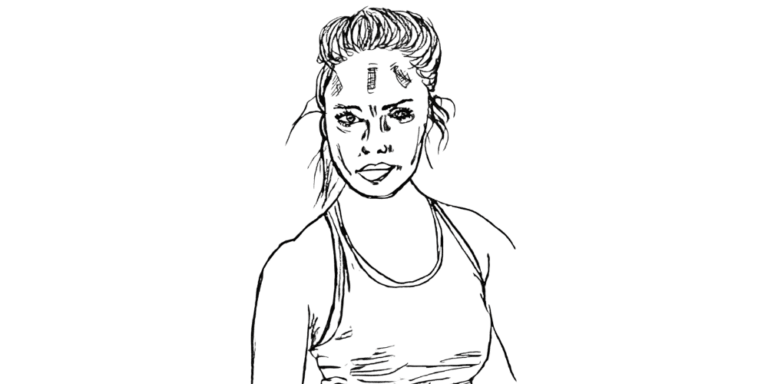
Letting go didn’t break her… it brought her back to herself.
How to Let Go Without Losing Yourself in a Relationship
This morning, she came back after a long time. I had seen her before, more than once, and each time I would ask her the same question—not because I didn’t know her story, but because I wanted to understand where she was within it. Each time, her answer carried the same weight. The same effort. The same feeling of trying to hold everything together.
But this time, something was different. Not in the facts she shared, but in the way she spoke. There was a calm that hadn’t been there before, a kind of clarity that didn’t need to justify itself. For the first time, she wasn’t trying to explain what had happened. She was simply telling it, as it was.
She told me that at the beginning, she loved him deeply. It wasn’t something she said lightly—you could feel that it came from something real, something she had fully lived. But over time, that love slowly shifted into something heavier. He was dealing with his own inner struggles, and without realizing it, she took on a role she had never consciously chosen. She became the one who supports, who fixes, who carries what is falling apart.
She tried everything she could think of. She read books, started therapy, moved to a different city hoping for a fresh start, learned when to stay silent to avoid conflict, and when to speak in the hope of understanding. Every time the relationship felt like it was collapsing, she found a new way to hold it together. For her, staying became a form of strength, and holding on became a proof of love.
But at some point, something became impossible to ignore. She realized that while she was trying to save him, she was slowly losing herself. She had become an extension of his needs, always present for him, but no longer present for her own life. Her dreams, her sense of joy, and even her connection to herself had gradually faded behind the effort of maintaining the relationship.
The moment that changed everything did not come from a dramatic event. It came from a quiet morning. She looked at herself in the mirror and felt a distance she couldn’t explain. She didn’t recognize the person she had become. In that moment, she understood that what she once believed was strength had turned into a form of imprisonment.
She also understood something that was difficult to accept: you cannot carry someone who does not want to walk. Letting go was not something that happened immediately. It took time, reflection, and the courage to face the idea that leaving was not abandonment—it was a way to survive and to return to herself.
When she finally made the decision to step away, it was not an act of rejection or anger. It was a decision to stop living someone else’s life in place of her own. She accepted that he had his own path, his own choices, and his own responsibility, and that she no longer needed to control what did not belong to her.
Instead of collapsing into guilt, she slowly began to redirect her energy toward herself. She went back to the studies she had abandoned, reconnected with people she had distanced from, and started listening again—not to what was expected from her, but to what she actually needed.
Today, she lives alone. He is still part of her story, but he is no longer the center of her life. She did not lose love in the process. She found herself again.
And when she finished telling her story, she said something that stayed with me—not as an idea, but as something she now fully understands: I can let go without abandoning myself.
This Doesn’t Happen Only in One Story
What she described is not something rare. It doesn’t belong only to her story, or to one type of relationship. It can happen slowly, in many different situations, without being noticed at first.
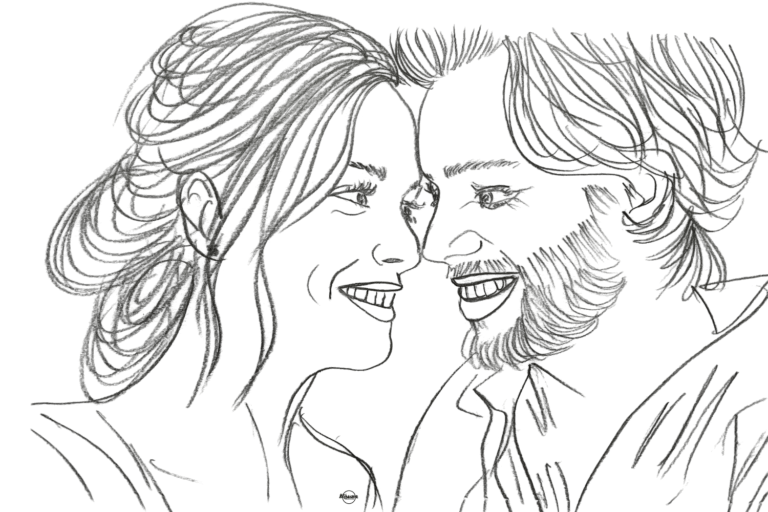
You don’t have to be in a difficult relationship for this to happen. Sometimes, it comes from caring deeply, from wanting things to work, from trying to hold on to something that once felt meaningful. And without realizing it, that effort turns into something constant, something that stays even when things begin to change.
Over time, the line between loving someone and losing yourself inside that love becomes less clear. You keep showing up, you keep giving, you keep adjusting, but you stop asking a simple question: where am I in all of this?
And because everything happens gradually, it doesn’t feel like a clear loss. It feels like adaptation. Like responsibility. Like something normal. Until one day, you notice a quiet distance between who you are and how you are living.
This is why her story matters. Not because it is unique, but because it reflects something many people experience without always having the words for it.
Where This Feeling Comes From
This feeling doesn’t start suddenly. It doesn’t appear one day without a reason. It builds slowly, in the way you adapt, in the way you respond, and in the way you try to keep things from falling apart.
At the beginning, it often comes from something genuine—care, attachment, the desire to protect what matters. You give your attention, your energy, your patience, not because you have to, but because you want things to work. And in that moment, nothing feels wrong.
But over time, something shifts quietly. You begin to adjust more than you express. You begin to hold more than you release. You begin to stay present for others while becoming less present for yourself.
It doesn’t feel like losing yourself at first. It feels like being supportive, like being strong, like doing what is needed. But what is not expressed doesn’t disappear. What is not released doesn’t resolve. It stays, and it accumulates.
This is how the feeling begins—not as a clear break, but as a gradual distance. A distance between what you feel and what you allow yourself to feel, between what you need and what you continue to give.
And because this process is quiet, it is often only noticed when the weight becomes too present to ignore.
Why You End Up Here
You don’t arrive at this point because you made a single wrong decision. You arrive here because certain patterns slowly become normal, even when they are no longer healthy for you.
One of the most common patterns is the belief that love means staying no matter what. That holding on, even when it becomes difficult, is a sign of strength. So instead of stepping back when something feels off, you try harder. You give more. You adjust more. You convince yourself that if you just do a little more, things will return to how they used to be.
Another reason is the fear of letting go. Not only because of the other person, but because of everything that has been invested—time, emotions, memories, effort. Letting go can feel like losing all of that, so you keep holding on, even when it costs you your sense of self.
There is also the need to feel responsible for what is happening. When someone you care about is struggling, it becomes easy to believe that you have a role in fixing it. You start carrying what doesn’t belong to you, thinking that if you are strong enough, patient enough, or understanding enough, things will change.
And slowly, without noticing it, your focus shifts completely. You stop asking what you need. You stop listening to your own limits. You become present for everything around you, but absent from yourself.
This is how you arrive here—not because you are weak, but because you stayed too long in a position that asked you to give more than you could sustain.
How to Let Go Without Abandoning Yourself
Letting go is often misunderstood. It is not about suddenly cutting everything off, forgetting what you felt, or pretending that nothing mattered. And it is not about becoming distant, cold, or detached from your emotions.
Letting go, in its truest sense, is about returning to yourself while allowing the other person to have their own path. It is a shift from trying to carry everything, to recognizing what actually belongs to you and what does not.
For her, it didn’t start with a decision. It started with a realization. She began to see that the effort she was making was no longer creating connection—it was creating exhaustion. And that staying in that dynamic was not preserving love, but slowly erasing her presence within it.
This kind of awareness is not always immediate. It often comes after a long period of trying, adjusting, and hoping things will change. But at some point, something becomes clear: you cannot create balance in a relationship by losing yourself inside it. This is something often explored in the context of emotional boundaries, including in this Psychology Today article on personal boundaries, where the importance of separating your responsibility from someone else’s experience is explained.
Letting go, then, becomes less about leaving the other person, and more about no longer leaving yourself. It means allowing yourself to feel what is there without trying to control the outcome. It means accepting that caring about someone does not require you to carry their pain, fix their path, or stay in a place that breaks you.
And this is not something you do all at once. It happens in small decisions. In moments where you choose not to over-explain. Where you choose to listen to your limits. Where you choose to step back, not as a reaction, but as a form of respect for yourself.
That is how she began. Not by forcing herself to be strong, but by allowing herself to stop carrying what was never hers to hold.
Journaling — A Way to Return to Yourself
After everything she understood, it became clear that what she needed was not more answers, but more space. A space where she could hear herself again without being influenced by what was expected from her, or by what she had been trying to maintain for so long.
Journaling became one of those spaces. Not as a method to solve everything, and not as a way to reach a perfect conclusion, but as a place where she could finally express what had been held for too long without filtering or adjusting it.
At first, it wasn’t easy. When you’ve spent so much time focusing on someone else, turning inward can feel unfamiliar. But slowly, the act of writing allowed her to notice what she had been ignoring—her own thoughts, her own limits, her own needs.
You don’t need to write something structured. You don’t need to find the right words. You can begin with simple questions: What am I feeling right now, without trying to justify it? Where do I feel that I am over-giving? What part of me has been waiting to be heard?
If it feels difficult to start, or if your thoughts feel scattered, you can use these Self-Discovery Journal Prompts as a gentle guide. Not to give you answers, but to help you stay with what you feel long enough to understand it more clearly.
There is no need to force clarity. Just let the words come as they are. And in that space, something begins to return—not because you fixed anything, but because you finally allowed yourself to be present with it.
Real Questions From Real People
These questions come from real moments—when people realize they have lost themselves in a relationship and are trying to understand what to do next.
“Someone told me: if you lose yourself in a relationship, you’re with the wrong person. Is that true?”
It’s not always that simple. Losing yourself in a relationship does not automatically mean the other person is “wrong.” Sometimes, it reflects how deeply you care, how much you give, or how much you try to make things work. The problem is not always the relationship itself, but the way you begin to disappear inside it without noticing. Over time, the balance shifts, and you stop showing up as yourself.
Simple way to begin: Instead of asking if the person is wrong, ask yourself: can I be myself in this relationship without losing my space, my voice, and my limits?
“How can I prevent losing myself in a relationship?”
You don’t prevent it by controlling everything or by protecting yourself emotionally at all times. You prevent it by staying connected to yourself while being connected to the other person. That means continuing to listen to your needs, your limits, and your feelings, even when the relationship becomes important.
Simple way to begin: Keep at least one part of your life that belongs only to you—your time, your interests, or your space where you reconnect with yourself.
“What is the ‘trick’ to accept that a relationship is over?”
There is no real trick, and that’s often the hardest part. Acceptance doesn’t come from forcing yourself to move on or from convincing yourself that it no longer matters. It comes from slowly allowing reality to settle without resisting it. You don’t accept it all at once—you begin by accepting small parts of it.
Simple way to begin: Instead of trying to accept everything, focus on one truth at a time: “This has changed.” Stay with that, without rushing the rest.
“How do I process the fact that they will no longer be part of my life?”
This is one of the most difficult parts of letting go. It’s not just the person you are losing—it’s the presence, the habits, the future you imagined. Processing it takes time because you are not only letting go of what was, but also of what could have been.
Simple way to begin: Allow yourself to feel the absence without trying to replace it immediately. Let your system adjust gradually instead of forcing closure.
“I lost myself in my relationship. How do I find myself again?”
You don’t find yourself by becoming someone new. You find yourself by returning to what you stopped listening to. Your preferences, your limits, your desires—they didn’t disappear, they were simply set aside. Reconnecting is not about rebuilding from zero, but about remembering what was always there.
Simple way to begin: Ask yourself simple questions daily: what do I want right now? What feels right for me today? And start from there.
“How do I find the courage to end a long-term relationship?”
Courage doesn’t always feel like strength. Sometimes, it feels like discomfort, fear, and uncertainty. Ending a long-term relationship is not only about leaving someone—it’s about stepping into the unknown. That’s why it takes time.
Simple way to begin: Instead of focusing on the final decision, focus on what you are feeling now. When staying feels heavier than leaving, that is often where courage begins to appear.
Final Reflection
Letting go is often seen as a loss. A moment where something ends, where something breaks, where something is left behind. But sometimes, it is not a loss in the way we imagine. It is a return.
What she experienced was not the end of love, but the end of losing herself inside it. And that distinction matters. Because it changes the meaning of the decision. It is no longer about walking away from someone, but about choosing to stay present with yourself.
There are moments in life where holding on feels like strength. Where staying feels like the right thing to do. But there are also moments where holding on slowly erases you, where staying asks you to give more than you can continue to offer without losing your balance.
Recognizing that difference is not a failure. It is a form of awareness. And acting on it, even when it feels difficult, is not abandonment. It is respect—for your limits, for your truth, and for the life you are trying to live.
You don’t need to rush this process. You don’t need to have everything figured out. Letting go is not something that happens in one decision. It happens in the way you begin to listen to yourself again, in the way you stop ignoring what feels heavy, and in the way you allow yourself to exist without constantly adjusting to keep everything together.
And maybe that is what she understood in the end. That letting go was not the opposite of love. It was the beginning of a different kind of relationship—one where she no longer disappeared inside it.
Because sometimes, the most honest form of love is the one where you can say: I can let go… and still remain myself.