Why Do We Keep Working When We’re No Longer Working Well?
There is a point where continuing to work and continuing to make progress stop being the same thing.
Why Do We Keep Working When We’re No Longer Working Well?
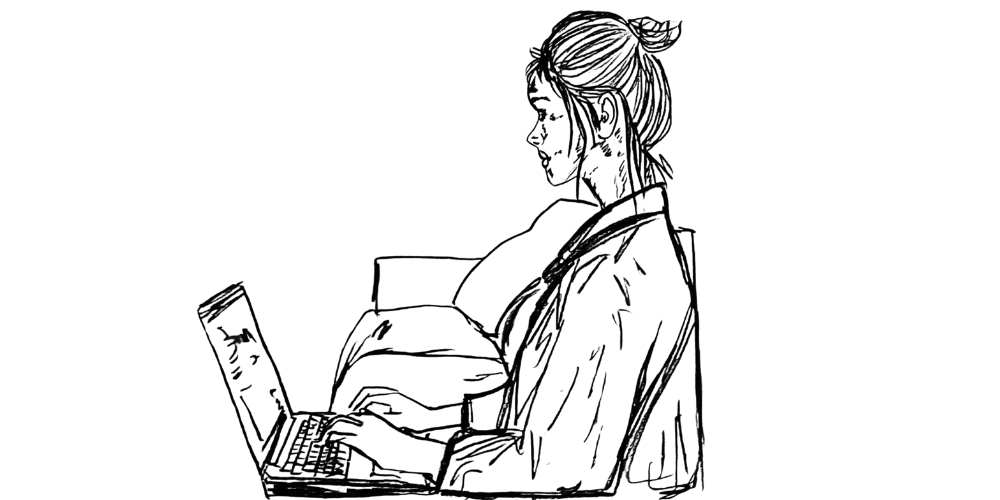
There are evenings when I remain at my desk long after the quality of my work has started to fall. I reread the same paragraph without absorbing it. I make a small mistake, correct it, and make another. A task that would normally take ten minutes stretches into thirty. Yet instead of stopping, I often respond by trying harder. I sit straighter, reopen the document, tell myself to finish one more thing, and assume that because I am still working, I must still be making progress.
But time spent on a task and useful work produced during that time are not identical. There can be a point at which another hour adds very little, or even creates work that has to be corrected later. The interesting question is not simply why we need rest. It is why we sometimes continue working after the evidence in front of us suggests that our current effort has become less effective.
Being at Work Is Not the Same as Working Effectively
Productivity is difficult to judge from the inside because effort is highly visible to us while effectiveness can be harder to measure. I know that I have been sitting at my computer for four hours. I know that I am tired. I know that I have resisted distractions and kept going. Those facts make the effort feel substantial. But they do not tell me how much useful progress occurred during the fourth hour compared with the first.
This becomes particularly noticeable in tasks that depend on attention, judgment, memory, creativity, or careful decision-making. I can continue typing even when my concentration has deteriorated. I can continue reading while retaining very little. I can continue editing while becoming less able to recognize whether my changes are improvements. The activity continues, so from the outside — and sometimes from the inside — it still looks like work.
The Last Hour Can Feel More Valuable Because It Cost More
Effort itself can influence how we evaluate what we are doing. If a task becomes increasingly difficult as I grow tired, each additional piece of progress feels expensive. That expense can make it seem important. I may think, I worked so hard on this tonight, even though much of that effort came from performing the task under conditions that made it unnecessarily difficult.
This creates an odd possibility: the least efficient part of the workday can sometimes feel like the most admirable part because it required the greatest struggle. Finishing a paragraph in fifteen clear minutes may feel ordinary. Finishing the same paragraph after an hour of mental fog can feel like perseverance. Yet difficulty does not automatically make the second version more valuable.
We Often Measure Persistence More Easily Than Quality
Persistence is simple to observe. Did I stop or continue? Did I finish or quit? Did I stay at my desk or leave it? Quality is more complicated. Was my judgment still good? Was I understanding what I read? Did I introduce mistakes? Was I solving the important problem or merely doing whatever required the least thought?
Because persistence produces such a clear yes-or-no answer, it can become an appealing measure of discipline. If I continue, I can tell myself I did not give up. But this measure ignores an important possibility: stopping can sometimes be part of completing the task well. If tomorrow’s rested hour can replace three poor hours tonight, continuing is not automatically the more disciplined choice.
Fatigue Does Not Always Announce Itself as “I Am Tired”
One reason we keep going is that declining performance does not always feel like obvious sleepiness. Sometimes fatigue appears as impatience. We become unusually irritated by a small problem. Sometimes it appears as indecision: two simple options suddenly feel impossible to compare. Sometimes we begin jumping between tabs, rereading instructions, forgetting what we were about to do, or choosing easier tasks because the important one feels strangely resistant.
None of those signs proves that fatigue is the cause. Distraction, boredom, anxiety, unclear instructions, lack of knowledge, and many other factors can produce similar experiences. But when several changes appear after a long period of sustained effort, it can be worth considering whether the problem is no longer motivation. Telling ourselves to concentrate harder may not address what has changed.
We Can Respond to Declining Performance by Increasing Effort
This response makes intuitive sense. If I notice that I am slowing down, I push harder. If my attention wanders, I force it back. If I make mistakes, I concentrate more intensely. For a while, increased effort may compensate. Human performance is not so fragile that the first sign of tiredness means we should immediately stop everything.
The difficulty is recognizing that compensation has a cost. Maintaining the same performance may require progressively more effort, and eventually the additional effort may no longer restore the quality that was present earlier. At that point, “try harder” becomes less useful advice because effort is already being spent partly on overcoming the condition under which the work is being performed.
Difficult Work and Depleted Work Can Feel Similar
This is where the decision becomes complicated. A task can feel difficult because it genuinely requires concentration, learning, patience, or persistence. If I stopped whenever work became uncomfortable, many worthwhile things would never be completed. Learning a new skill can be frustrating even when I am well rested. Writing can feel slow because an idea is genuinely difficult to express. Solving an unfamiliar problem may require staying with confusion rather than escaping it.
But the same task can also become difficult because my current capacity has changed. The question is not merely “Does this feel hard?” but “What kind of hard is this?” Am I encountering the difficulty of the task itself, or am I now struggling to perform a task I could handle much more effectively under different conditions?
One Clue Is Whether the Difficulty Is Producing New Information
When productive struggle is happening, difficulty often leads somewhere. I try an approach and discover why it fails. I reread a difficult section and understand something I missed. I revise a paragraph and can explain what improved. I practice a skill and begin identifying specific weaknesses. The task remains demanding, but the effort produces information.
Depleted effort can look different. I cycle through the same options without learning anything new. I repeatedly undo changes I just made. I read the same material while comprehension continues to fall. I make decisions and immediately distrust them. I am still exerting effort, but the effort is becoming repetitive rather than informative.
“Just One More Thing” Has No Natural Ending
Another reason we continue is that work rarely presents a perfect stopping point. There is almost always one more email, paragraph, correction, message, page, or small task available. If I decide that I will stop only when there is nothing else I could usefully do, I may never receive permission to stop because most ongoing projects are structurally unfinished.
“One more thing” also feels inexpensive when considered individually. Five more minutes seems harmless. But after the five minutes, another small task appears equally manageable. The decision is repeatedly evaluated as a tiny extension rather than as the cumulative choice to continue for another hour.
Stopping in the Middle Can Feel Worse Than Continuing Inefficiently
There is also psychological discomfort in leaving something incomplete. An unfinished task remains mentally available. We know we will have to return to it. Closing the laptop does not produce the clean satisfaction of completion, so continuing promises a more attractive ending: if I can just finish this section, tomorrow will begin without it.
Sometimes that is a perfectly reasonable trade. An additional twenty minutes may genuinely allow us to complete something and remove a future burden. But the calculation changes when the final twenty minutes repeatedly become ninety, or when finishing tonight creates errors that tomorrow begins by repairing. Completion has value, but so does the condition in which completion occurs.
Past Effort Can Make Stopping Feel Like Wasting the Effort Already Spent
After spending hours on something, stopping can feel particularly difficult. We think, I’ve already come this far. I can’t stop now. But the hours already spent do not become more valuable simply because we add another tired hour to them. What matters for the next decision is what additional effort is likely to produce from this point forward.
This principle appears in many areas of life. Previous investment can influence us even when it cannot be recovered. With work, the effect can be subtle because continuing often remains genuinely useful. The question is not whether the project should be abandoned. It may simply be whether another hour tonight is more valuable than an hour tomorrow.
Stopping and Abandoning Are Not the Same Decision
This distinction is surprisingly important. When we are deeply focused on completing something, stopping for the day can emotionally resemble giving up on the task. But these are different decisions. “I am not doing this anymore” is not the same as “I am not doing the next part under these conditions.”
A pause can preserve commitment rather than weaken it. I can decide that the work matters enough that I would rather return when I can evaluate it properly. In this sense, stopping is not automatically an alternative to persistence. It can be one of the ways persistence is organized over time.
More Hours Can Create Hidden Work for Tomorrow
The apparent benefit of continuing is easy to count: I completed three additional pages, answered six emails, or edited another section. The cost can be less visible because it appears later. Tomorrow I may have to correct careless mistakes, reconstruct a decision I made too quickly, reread material I did not retain, or rewrite work whose quality dropped without me noticing.
This means the true output of an exhausted hour is not necessarily everything produced during that hour. Some of it may be borrowed against future time. If an hour produces forty minutes of correction tomorrow, its contribution looks different from an hour whose work remains useful.
Not All Tasks Deteriorate at the Same Rate
Another reason a simple rule such as “stop when you’re tired” is inadequate is that different tasks place different demands on us. When careful judgment has deteriorated, I may still be perfectly capable of doing routine administrative work. When creative thinking feels impossible, organizing existing material may remain manageable. When reading complex information becomes ineffective, a simple mechanical task may still be completed accurately.
Instead of thinking only in terms of working versus resting, it can sometimes be useful to think about matching tasks to available capacity. The most demanding work may belong earlier in a period of concentration, while lower-demand tasks can sometimes be moved to times when attention is less sharp. This does not eliminate the need for rest, but it recognizes that capacity is not all-or-nothing.
Productivity Can Improve When We Stop Treating Every Hour as Equal
A schedule may allocate identical sixty-minute blocks, but those blocks are not necessarily interchangeable. The quality of attention available at different points can vary with sleep, workload, interruptions, time already spent concentrating, and individual rhythms. An hour in which I can reason clearly may be worth far more for a demanding task than an hour in which I am repeatedly losing the thread.
This suggests a different way to think about efficiency. Instead of asking only how many hours I can fit into a day, I can ask which work deserves my better hours. Extending the day indefinitely may increase total working time while reducing the proportion of that time in which difficult work is done well.
Rest Does Not Need to Be Justified as a Reward
We sometimes organize rest as something that becomes permissible after enough work has been completed: finish the task, then stop; reach the goal, then relax; prove that the day was productive, then rest without guilt. The problem is that many forms of work have no natural endpoint. If rest requires complete completion, it can remain permanently conditional.
There is another way to understand it. Rest can be one of the conditions that makes future effort possible. Under that view, it does not have to compete morally with productivity. The practical question becomes whether continuing now or recovering before continuing is likely to produce better work overall.
The Useful Question Is Not “Can I Keep Going?”
Often, the answer to that question is yes. We can keep going long after our best concentration has disappeared. We can finish another page, answer another message, and remain awake another hour. Human beings are capable of pushing through substantial discomfort when necessary. But ability alone does not tell us whether doing so is useful.
A better question may be: “What is another hour likely to produce?” If there is a genuine deadline, emergency, or consequence that makes continuing necessary, the answer may justify the cost. If the additional hour is likely to consist mostly of rereading, correcting, drifting, and forcing ourselves through work that can reasonably continue later, then the fact that we technically can continue becomes much less important.
Before Stopping, We Can Leave a Clear Place to Return
Sometimes we continue because we are afraid of losing momentum. We know where we are now, and stopping means reconstructing that mental context later. One practical response is to make the return easier. Before leaving a task, we can write a sentence about what comes next, leave a note about the unresolved question, or identify the first action for the next work period.
This can turn stopping from an abrupt break into a deliberate handoff to our future selves. The Mibosma Free Tools can also be used to reflect on patterns such as when concentration tends to decline, which tasks become difficult first, and whether additional work time is actually producing useful progress.
Rest Is Not Always the Answer Either
It is important not to turn this argument into another universal rule. Difficulty concentrating does not always mean we need rest. Sometimes the task is unclear. Sometimes we are avoiding an uncomfortable part. Sometimes our environment is distracting. Sometimes we need information, practice, a different approach, or a clearer next step. Taking a break will not automatically solve those problems.
The purpose is not to interpret every moment of resistance as the body wisely demanding rest. It is to become more accurate about what is limiting the work. If I return after a break and encounter exactly the same conceptual obstacle, perhaps fatigue was never the main issue. If a problem that felt impossible at midnight becomes straightforward the next morning, that tells me something different.
Mental Fatigue Is Not One Simple Decline
One complication is that mental fatigue has both a subjective side and a performance side. I can feel mentally exhausted while still maintaining reasonably good performance for a period of time, perhaps because I am increasing my effort to compensate. At another moment, I may underestimate how much my accuracy or attention has declined because I am too immersed in the task to notice it clearly. Feeling tired and performing poorly can occur together, but they are not interchangeable measures.
This helps explain why deciding when to stop cannot rely on one sensation alone. If I feel tired but the task is important, short, and still being completed accurately, continuing may be reasonable. If I insist that I feel perfectly fine while repeatedly making mistakes, forgetting instructions, or taking much longer than usual to complete simple steps, my subjective confidence does not erase the evidence in my performance. The more useful picture comes from considering both how the work feels and what is actually happening to the work.
Research Distinguishes Feeling Fatigued From Performance Fatigue
A scientific framework on fatigue and human performance makes this distinction explicit. Researchers describe perceived cognitive fatigue — the subjective experience of mental tiredness — separately from cognitive performance fatigue, which can be observed through changes such as reaction time, variability, or accuracy during or after sustained cognitive activity. Importantly, prolonged cognitive work does not produce exactly the same measurable decline in every person or every task. People may sometimes compensate through additional effort, and factors such as task characteristics and individual differences can influence what happens.
The review, Fatigue and Human Performance: An Updated Framework, is useful precisely because it prevents an overly simple conclusion such as “working for a long time always makes performance worse in the same way.” Mental fatigue is more complicated. That supports a more practical approach: rather than assuming that a certain number of hours automatically means we should stop, we can pay attention to the demands of the task, our subjective fatigue, and observable changes in how we are performing.
Sometimes We Maintain Performance by Spending More Effort
This also explains a familiar experience: the work still gets done, but it feels increasingly expensive. Earlier in the day, I may read a paragraph once and understand it. Later, I can still understand the same kind of material, but only by rereading it several times and deliberately pulling my attention back whenever it drifts. From the outside, performance may appear stable. Internally, the effort required to maintain it has changed.
That does not mean the extra effort is always a problem. Deadlines exist. Important responsibilities sometimes have to be completed under less-than-ideal conditions. We are capable of compensating when necessary, and that capacity is useful. But compensation should not be confused with unlimited capacity. If maintaining ordinary performance requires progressively greater effort, that information belongs in the decision about how long to continue.
The Cost of Continuing Depends on What the Task Requires
Imagine that I am entering information into a simple system and can still do it accurately despite feeling somewhat tired. Continuing for another twenty minutes may be perfectly reasonable. Now imagine that I am reviewing a complicated contract, making a consequential financial decision, editing something where small errors matter, or trying to solve a problem that requires holding several pieces of information in mind at once. The same degree of fatigue may deserve a different response because the cost of reduced judgment is different.
This is why “listen to your body” is too vague to be the central rule. The body does not provide a perfectly interpreted instruction telling us exactly when to stop. We have to combine internal information with the demands of the situation. What am I doing? How costly would a mistake be? Can it be corrected easily? Is there a deadline? Can someone else review the work? Would postponing create a larger problem? These questions turn fatigue from a moral issue into a practical one.
Breaks Can Help Without Being Magical Resets
We often speak about breaks as though ten minutes away from a task restores the mind to its original condition. Real effects are less predictable. A break may interrupt monotony, allow us to move, eat, drink, change our visual focus, or simply stop performing the same demanding activity for a while. We may return feeling noticeably better. At other times, a short break does very little because the underlying fatigue is substantial or because the real problem was never fatigue in the first place.
This means a break can also function as information. If I step away briefly and return able to understand a problem that had become incomprehensible, fatigue or prolonged engagement may have been contributing to the difficulty. If I return and immediately encounter the same obstacle, perhaps the task needs a different approach rather than another pause. Instead of assuming that breaks always work, we can observe what changes after one.
A Break Can Also Have a Cost
There are situations in which stopping briefly disrupts useful concentration. If I have finally understood a complicated structure, built a detailed mental model of a problem, or entered a period of sustained focus, interrupting myself simply because a timer says I should take a break may not improve anything. Returning can require reconstructing the context I had already built.
This is another reason rigid productivity systems should be treated as tools rather than laws. A schedule that alternates fixed work and rest periods may be extremely useful for one person or one type of task and irritating for another. The best stopping point can sometimes be determined by the structure of the work itself: finish the current coherent section, record what comes next, and then step away.
Rest and Task Switching Are Different Strategies
When demanding work becomes difficult, we do not always need to choose between continuing the same task and stopping work entirely. Sometimes switching to a lower-demand task makes sense. I may no longer trust myself to make important editorial decisions, but I can organize files. I may be unable to write a difficult section clearly, but I can prepare references or complete a routine administrative task. Matching the task to the capacity available can make the remaining work period more useful.
But task switching can also disguise avoidance. If every difficult moment sends me toward email, organization, formatting, or another easy task, I may spend an entire day being busy around the work I intended to do. The distinction again depends on the pattern. Switching because my capacity for a demanding task has genuinely declined is different from switching whenever the task becomes intellectually uncomfortable.
Boredom, Fatigue, and Avoidance Can Produce Similar Behavior
This overlap makes self-observation difficult. I reread the same sentence three times. Am I mentally fatigued? Perhaps. Am I bored because the task is repetitive? Possibly. Am I avoiding the next paragraph because I do not know how to write it? That is another possibility. Did a notification interrupt my attention five minutes ago and I have not fully returned? Also possible.
Instead of trying to identify the cause from the feeling alone, we can test small changes. If a short break restores concentration, that provides one clue. If changing to a more engaging part of the same project immediately restores attention, boredom may have been contributing. If I remain alert for every other activity but become mysteriously exhausted whenever I approach one specific difficult task, avoidance deserves consideration. None of these tests provides a diagnosis, but they can help us stop treating every form of resistance as the same phenomenon.
Sometimes the Problem Is That We Do Not Know What to Do Next
An unclear task can create a surprisingly fatigue-like experience. “Work on the project” demands repeated decisions about where to begin, what matters most, and what counts as progress. By contrast, “compare these three paragraphs and choose which one communicates the idea most clearly” gives attention a defined target. When the next action is vague, we may spend considerable mental effort simply deciding how to engage with the work.
Before concluding that I am too tired to continue, it can therefore help to make the next action concrete. If the fog lifts once I know exactly what I am doing, rest may not have been the missing ingredient. If even a clear and manageable next step feels unusually difficult after prolonged effort, fatigue becomes a more plausible part of the explanation.
Hours Worked Can Become a Misleading Scoreboard
Time is attractive as a measure of productivity because it is objective and easy to count. Six hours is clearly more time than four. But it does not follow that six hours produced more useful work than four, especially when the additional hours occur under declining concentration. If we evaluate a day primarily by duration, stopping earlier can feel like failure even when the important work has already been completed well.
Output is not a perfect measure either. Producing more words does not guarantee better writing. Answering more messages does not guarantee that the important work was done. Completing more tasks can simply mean choosing smaller tasks. The point is not to replace one rigid metric with another but to recognize that no single number captures the quality of a working day.
Visible Work Can Feel More Legitimate Than Invisible Recovery
There is also an asymmetry in what we can point to afterward. Work leaves evidence: a completed document, a sent email, a finished page, a checked box. Recovery often leaves nothing visible. If I stop an hour earlier and sleep, walk, eat, or simply spend time away from the task, I cannot place that hour next to the finished document and show exactly which future mistake it prevented or which idea it made possible.
Because the benefit is uncertain and delayed, continuing can feel easier to justify. I know what I produced during the extra hour. I cannot know exactly what would have happened if I had stopped. This uncertainty is one reason we should be careful with grand claims that rest always “makes us more productive.” Sometimes it may help later performance; sometimes it may simply be necessary for reasons that do not need to be converted into productivity at all.
Rest Does Not Have to Earn Its Value by Creating More Work
There is a strange contradiction in some discussions of rest. We say that people should stop treating their worth as productivity, then justify rest almost entirely by promising that it will make them more productive afterward. Rest becomes acceptable only because it serves work. If it does not produce better concentration, more creativity, or greater output tomorrow, we begin wondering whether it was worthwhile.
But human life contains needs that do not have to justify themselves through economic or creative output. Sleep, leisure, relationships, meals, movement, and time that is not optimized can have value independently of what they allow us to produce later. This article is specifically examining the relationship between fatigue and work quality, but that does not mean work quality is the only legitimate reason to stop working.
There Are Also Times When Continuing Is the Reasonable Choice
A balanced approach has to acknowledge this. Sometimes we are tired and still need to finish. A deadline cannot move. Someone is depending on us. Stopping now would create a larger problem tomorrow. The remaining task is short and manageable. Or we know from experience that finishing the current section will make it much easier to resume later.
In those situations, continuing is not evidence that we are ignoring ourselves, just as stopping is not automatically evidence of wisdom. We are making a trade-off. The useful question is whether we recognize the trade-off clearly rather than automatically treating endurance as the superior choice.
When Continuing Is Necessary, We Can Change the Standard
If I genuinely need to work while fatigued, I may be able to reduce the risk created by that condition. I can postpone optional decisions, double-check important details, use a checklist, simplify the task, reduce distractions, or leave high-stakes judgments for later when possible. I can distinguish what absolutely needs completion from what merely would be nice to finish.
This approach is more realistic than pretending we can always arrange ideal working conditions. Sometimes the question is not whether I should work tired but how to work more carefully when tiredness cannot be avoided. Recognizing reduced capacity can influence how we structure the remaining work without requiring us to abandon it completely.
A Simple Three-Way Decision Can Be More Useful Than “Push or Quit”
When I notice that my work is deteriorating, I can think in terms of three options rather than two: continue, change, or stop. I continue when the work is still useful, the remaining demand is manageable, or the cost of postponing is greater. I change when I still have usable capacity but the current task demands more than I can give it well — perhaps moving from difficult analysis to routine work. I stop when additional effort is producing little useful progress, creating avoidable errors, or consuming time that would probably be better used after recovery.
None of these decisions needs to say anything about my character. Continuing does not prove discipline. Changing tasks does not prove weakness. Stopping does not prove wisdom. They are strategies whose value depends on what they produce in the situation in front of me.
We Can Learn Our Own Signs of Diminishing Returns
Over time, patterns become easier to recognize. Perhaps my first sign is not tiredness but rereading. Perhaps I begin making formatting changes because substantive decisions have become difficult. Perhaps I start checking unrelated things every few minutes. Perhaps my writing becomes unnecessarily complicated because I can no longer see the simpler version. Someone else may notice a completely different pattern.
Recording these observations occasionally can be more informative than adopting someone else’s ideal work schedule. The Mibosma Free Tools can provide a place to reflect on when concentration tends to change, which tasks are most affected, and what happens when you continue, switch tasks, or stop. The aim is not to monitor every minute of productivity but to recognize recurring patterns that can make future decisions easier.
The Best Stopping Point May Become Visible Only in Retrospect
We will not always make the correct decision in the moment. Sometimes I will stop and later realize that I could easily have finished. Sometimes I will continue for two hours and discover the next morning that much of what I produced needs rewriting. Those outcomes are not wasted information. They help calibrate future judgments.
Instead of expecting perfect self-knowledge, I can compare prediction with outcome. When I thought I needed to push through, what happened to the work? When I stopped earlier, was returning actually difficult? Did the break help, do nothing, or make restarting harder? Over repeated experiences, those answers can become more useful than generic rules about how long a productive person should work.
Final Reflection
I used to think the decision to continue working was mostly a question of determination. If I could keep going, I should. Stopping before everything was finished felt like choosing less effort when more effort was still technically available. But that way of thinking confused capacity with usefulness. The fact that I can spend another hour on something does not tell me what that hour will contribute.
Now the distinction I find more useful is not between being strong enough to continue and wise enough to rest. It is between effort and effective effort. Sometimes they remain aligned for hours. Sometimes the work becomes difficult but productive, and persistence is exactly what it needs. Sometimes a change of task is enough. And sometimes another hour mostly produces mistakes, repetition, indecision, and work that tomorrow will have to repair.
There is no universal number of minutes that tells us when that point has arrived. Mental fatigue is not identical across people or tasks, and feeling tired does not automatically mean performance has collapsed. But we can become better at noticing the relationship between the effort we are spending and the work that effort is producing.
The question, then, is not simply “Can I keep going?” Sometimes the more useful question is: “If I keep going like this, am I still doing work that is worth continuing right now?”