Why Can Enjoyable Time Feel Wasted Afterward?

We can genuinely enjoy an hour and still judge it harshly afterward because enjoyment and usefulness are not always measured by the same standard.
Why Can Enjoyable Time Feel Wasted Afterward?
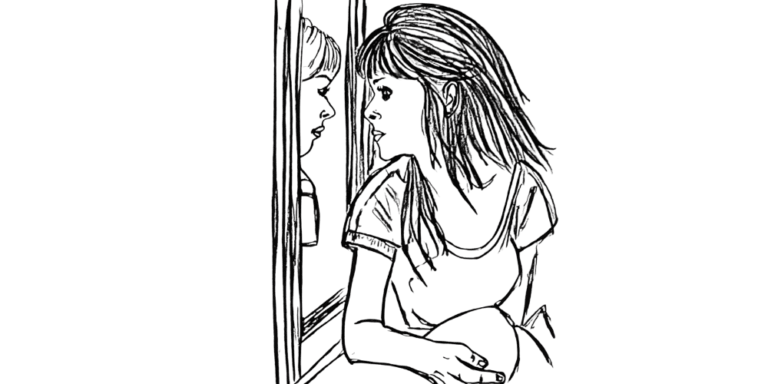
You spend an afternoon doing something you genuinely enjoy. Perhaps you talk with a friend longer than expected, walk without a destination, watch a film, sit outside, browse a bookstore, cook something slowly, or become absorbed in a subject that has nothing to do with your work. During the experience, nothing seems particularly wrong. Then the evening arrives, you remember what you did not finish, and the meaning of those hours changes. What felt enjoyable while you were living it suddenly begins to look irresponsible in retrospect. “I wasted the whole afternoon,” you think. But what exactly makes enjoyable time become wasted time once we look backward?
The answer is not simply that we feel guilty whenever we are not productive. Sometimes regret is useful. We really can spend time in ways that conflict with our priorities, avoid something important, or continue an enjoyable activity much longer than we intended. But the feeling that time was wasted can also appear when nothing obviously harmful happened. We enjoyed the experience, chose it voluntarily, and might even choose it again—yet still struggle to count it as a legitimate use of time.
This suggests that “wasted time” is not only a description of what we did. It is also a judgment made according to the standard we use afterward.
Time Does Not Produce the Same Kind of Evidence as Money
If we spend money on something, there is often a visible result. We buy a chair and still have the chair tomorrow. We pay for a repair and can see what was fixed. Time behaves differently. Two hours pass whether we produce something tangible or simply enjoy them. Once they are gone, we cannot point to the hours themselves.
This can make visible outputs psychologically important. If we spend two hours completing a document, cleaning a room, or repairing something, the result provides evidence of where the time went. If we spend the same two hours in a long conversation, there may be nothing physical to show afterward.
The absence of an object, completed task, or measurable result can make the second period easier to classify as “nothing,” even though an experience occurred throughout it.
We Often Evaluate Time by What Remains After It
Imagine two evenings. During the first, you organize a cupboard. During the second, you sit with someone you care about and talk. The following morning, the organized cupboard remains visible. The conversation does not.
If we judge yesterday primarily by what is still observable today, the first evening has an advantage. Its outcome can be inspected. The second evening has become memory.
Yet permanence and value are not the same thing. Many meaningful experiences are temporary by their nature. A meal ends. A conversation ends. Music stops. A walk finishes. A celebration lasts only a few hours. Their disappearance does not retroactively make them useless.
“Useful” Is Often Defined More Narrowly Than We Realize
When people describe time as useful, they often mean that it moved something forward. Work was completed. Money was earned. A problem was solved. A skill was practiced. An obligation disappeared from the list. These are genuine forms of usefulness.
But the definition can become so narrow that any activity without an obvious future payoff appears difficult to justify. We begin asking what a hobby teaches us, whether a walk improves health, whether reading fiction develops empathy, whether seeing friends is good for well-being, or whether rest will make us more productive tomorrow.
Those benefits may exist, but notice what happens when we rely on them to defend every enjoyable activity: pleasure becomes acceptable only after we prove that it produces something else.
We Can Turn Enjoyment Into an Investment Without Noticing
There is a subtle difference between recognizing that an enjoyable activity has benefits and believing those benefits are what make the activity legitimate. A person may enjoy exercise and also appreciate its physical effects. Someone may love reading and also learn from it. A social evening may be enjoyable while also strengthening a relationship.
The difficulty appears when the secondary benefit becomes the justification required for the activity to deserve time. Reading must teach us something. Walking must improve our health. Rest must increase tomorrow’s performance. A hobby must develop a skill. Even sleep can begin to sound valuable primarily because it makes us more effective after waking.
In that framework, the present is repeatedly asked to justify itself through the future.
The Same Activity Can Feel Different Depending on Whether It Was Planned
Suppose you decide in advance that Saturday evening is for watching a film. You watch it and enjoy it. Now imagine that you intended to work on Saturday evening but ended up watching exactly the same film instead. The activity has not changed, yet the second experience may produce considerably more guilt.
The difference is partly about violated intention. In the second situation, the film is competing with something we had previously decided mattered. What feels like guilt about leisure may actually be disappointment about not following our own plan.
This distinction is useful because it prevents us from making the wrong diagnosis. If the problem is repeatedly abandoning important intentions, convincing ourselves that all leisure is valuable will not solve it. But if we deliberately chose the leisure and still cannot allow it to count as legitimate time, a different question is involved.
Unfinished Tasks Can Change the Meaning of Free Time
An enjoyable activity often feels different when an unfinished obligation is waiting nearby. The film itself may be entertaining, but part of our attention remembers the email we promised to send. The walk may be pleasant, but tomorrow’s deadline remains in the background. We may be physically away from the task while mentally comparing every passing minute with the alternative use of that minute.
This is one reason two identical hours of leisure can feel completely different. When obligations feel manageable, leisure can seem chosen. When an urgent task is being postponed, the same activity can feel borrowed from something else.
The feeling is not necessarily irrational. Time really does involve alternatives. Choosing one activity means not doing another during those minutes. But the existence of an alternative does not automatically prove that the alternative was better.
Every Use of Time Has an Opportunity Cost
If you spend an hour reading, you cannot simultaneously use that exact hour to clean, work, exercise, call someone, sleep, or watch a film. Economists describe this kind of trade-off through the idea of opportunity cost: choosing one option means giving up the opportunities available through alternatives.
We often notice opportunity cost most strongly during leisure because the alternatives can sound more responsible. While watching a series, it is easy to imagine the work we could have completed instead. But the comparison also works in reverse. An extra hour of work may cost an hour we could have spent with family. Cleaning something that was already sufficiently clean may cost time that could have been used for sleep.
Opportunity cost does not tell us which activity is correct. It simply reminds us that every choice excludes other choices—including choices we normally label productive.
Hindsight Makes the Alternative Look Cleaner Than It Really Was
After an afternoon has passed, it is easy to imagine an alternative version in which we used every hour perfectly. Instead of wandering around shops, we picture ourselves completing the difficult project. Instead of talking for three hours, we imagine efficiently finishing every task on the list.
But the imagined alternative is often unusually tidy. It excludes fatigue, distraction, interruptions, difficulty starting, and all the other realities that might have shaped those hours if we had chosen differently.
We compare what actually happened—with all its imperfections—to an alternative that never had to encounter reality. Naturally, the imagined version can look more efficient.
A Pleasant Experience Can Still Last Longer Than We Wanted
Defending the legitimacy of enjoyment does not require pretending that duration never matters. We can enjoy an activity and still conclude that we spent more time on it than we wanted. Watching one episode may have been exactly how we wanted to spend the evening; watching four more because autoplay kept us there may feel different afterward.
The useful distinction is between regretting the activity and regretting its duration. “I shouldn’t have watched anything” is not the same conclusion as “I enjoyed watching this, but I wish I had stopped earlier.”
Separating those judgments can prevent a small problem of timing from becoming a moral judgment about leisure itself.
Starting Can Be Intentional Even When Continuing Becomes Automatic
Many enjoyable activities are designed to make continuation easy. Another video begins. Another post appears. Another episode is available immediately. A game offers one more round. A conversation online leads to another link and another topic.
We may therefore begin an activity deliberately and continue it with much less deliberate choice. When we later evaluate the entire period, we treat it as one decision: “I chose to spend three hours doing this.” In reality, the first twenty minutes and the final hour may have involved very different levels of intention.
This helps explain why some leisure leaves us satisfied while other leisure feels strangely empty despite being pleasant moment by moment. Enjoyment and intentionality are related questions, but they are not identical.
Not All Pleasant Activities Leave the Same Aftertaste
Two activities can both feel good while we are doing them and produce different evaluations afterward. One may leave us satisfied: we are glad we spent the time that way. Another may have been enjoyable in each moment but leave us wondering why we continued for so long.
This distinction matters because immediate pleasure is not the only criterion we use when evaluating time. We also care about whether the activity matched what we wanted, whether we chose its duration, what it displaced, and how we feel about the experience once it is complete.
Calling both activities “enjoyable” does not erase those differences.
Rest and Enjoyment Are Not Exactly the Same Thing
We sometimes use the word “rest” to justify any activity that is not work, but leisure can be stimulating, demanding, exciting, social, competitive, or mentally absorbing. A long conversation can be wonderful without being restful. A challenging game can be enjoyable while requiring intense concentration. Traveling can be meaningful while leaving us physically tired.
This distinction prevents us from creating another unrealistic expectation. An activity does not have to make us rested in order to deserve time, just as rest does not always have to be entertaining.
Different forms of non-work time can serve different purposes, and sometimes they need no purpose beyond the fact that we wanted the experience.
We Can Enjoy Something and Still Decide Not to Repeat It
Enjoyment does not obligate us to conclude that an activity was a good use of time in every circumstance. Perhaps we enjoyed a long evening but slept too little before an important morning. Perhaps an entertaining distraction repeatedly interferes with a goal we care about. Perhaps something is pleasant in small amounts but unsatisfying when it occupies an entire day.
A mature evaluation can hold both facts at once: “I enjoyed that” and “I would choose differently next time.”
This is more precise than rewriting the entire experience as wasted. It allows enjoyment to have been real while still learning something about priorities, timing, or limits.
Productive Time Can Also Be Wasted
We rarely apply the phrase “wasted time” as aggressively to activities that look productive. Yet productivity does not guarantee usefulness. We can spend an hour answering low-priority emails to avoid one important task. We can reorganize files that were already usable. We can perfect a detail nobody will notice. We can attend a meeting that did not need to happen.
These activities leave visible evidence of effort, so they may escape the judgment we apply to leisure. But if wasted time means time poorly aligned with what mattered, then apparently productive activity can qualify too.
This reveals an important bias in the way we evaluate our days: effort and visible output can make an activity look worthwhile even when its actual value was limited.
A Full Schedule Can Create Its Own Evidence of Importance
A crowded day often feels substantial because we can name everything that happened. Appointment, email, errand, task, call, meeting, deadline. An unstructured afternoon can be harder to describe. “I walked around, had coffee, talked to someone, and came home” sounds almost empty beside a list of completed obligations.
But the ease with which an experience fits into a list does not determine its value. Schedules are good at recording events and obligations. They are less good at representing the quality of an afternoon, the importance of a conversation, curiosity, amusement, or the feeling of having enjoyed where we were.
Some forms of time simply produce better administrative records than others.
We May Judge Yesterday Using Today’s Priorities
Retrospective judgment can also change because our priorities change. Perhaps yesterday evening we genuinely wanted to see friends. Today a deadline feels more urgent, and we reinterpret the evening through today’s pressure. The decision that made sense in one context now appears careless in another.
This does not mean our earlier decision was necessarily correct. New information can reveal that we underestimated an obligation. But it is worth asking whether we are judging the past using information or urgency that was not equally present when the choice was made.
A fair evaluation considers what we knew, wanted, and needed at the time—not only what seems important afterward.
Enjoyment Becomes Easier to Defend When Someone Else Approves of It
Notice how differently leisure can sound depending on its social description. Reading a respected novel may seem more legitimate than reading something considered trivial. Visiting a museum can sound more worthwhile than spending the same time enjoying an ordinary hobby. A social activity may seem justified because relationships are important, while enjoying several hours alone can require more explanation.
This suggests that our judgments about time are influenced not only by productivity but by cultural ideas about which pleasures count as respectable.
Yet personal enjoyment does not always follow those rankings. An activity can look impressive and leave us bored, while something ordinary can become one of the most enjoyable parts of the week.
The Question Is Not Whether Every Minute Was Maximized
If we evaluate time according to the best imaginable alternative, almost every choice can look inadequate. There was probably always something more productive, educational, healthy, profitable, social, efficient, or memorable that we could theoretically have done.
But a life cannot be constructed by selecting the objectively highest-value activity for every available minute because there is no universal scale capable of ranking all those values. Even if there were, we would rarely possess enough information to make the perfect choice in advance.
A more realistic question is whether the way we spent the time was acceptable given what mattered in that situation.
“Would I Choose It Again?” Can Be More Informative Than “Was It Productive?”
After an enjoyable period, one useful question is whether we would knowingly make the same choice again under similar circumstances. If the answer is yes, calling the entire experience wasted becomes difficult to defend. We knew what the alternatives were, experienced the outcome, and would still choose it.
If the answer is no, the next question can become more specific. Was the activity itself the problem? Did it last too long? Did it replace something unusually important? Did we continue after it stopped being satisfying? Did we choose it, or simply drift into it?
Those questions teach us more than guilt because they identify what we might actually change next time.
Enjoyable Time Does Not Need to Win a Court Case
There is something revealing about how often leisure is defended through evidence. The walk improved our health. The hobby developed creativity. The conversation strengthened social connection. The vacation reduced stress. These may all be true, but we do not normally demand comparable justification from every productive activity.
Sometimes an experience can be worth choosing because we wanted to experience it. That does not mean desires should override every responsibility or that consequences disappear. It simply means pleasure can be one legitimate consideration among the many things that influence how we use limited time.
The ability to enjoy an hour does not make the hour automatically well spent. But neither does the absence of measurable output make it automatically wasted.
Research Suggests That Seeing Leisure as Wasteful Can Change the Experience Itself
There is research that comes remarkably close to the question at the center of this article. Gabriela N. Tonietto, Selin A. Malkoc, Rebecca Walker Reczek, and Michael I. Norton examined what happens when people believe leisure is wasteful or unproductive. Across four studies involving 1,310 participants, people who more strongly viewed leisure as wasteful tended to report less enjoyment of leisure activities, particularly activities pursued primarily for enjoyment rather than as a means toward another goal. The researchers also experimentally encouraged participants to think of leisure as wasteful or unproductive and found that this framing reduced enjoyment of a subsequent leisure experience.
The distinction between leisure pursued for its own sake and leisure pursued instrumentally is especially relevant here. An activity such as exercise, for example, can be enjoyable in itself while also serving another purpose such as physical fitness. Spending time with friends can be enjoyable while also maintaining relationships. But some leisure has no obvious secondary achievement attached to it. We may watch something because it is entertaining, sit somewhere because we enjoy being there, or spend time on a hobby without trying to become particularly skilled at it. The research suggests that beliefs about wasted time can be particularly important for how people experience this kind of leisure.
The findings do not mean that every uncomfortable feeling during leisure is caused by a productivity mindset, nor do they establish that every leisure activity is a good use of time. Responsibilities, procrastination, financial constraints, deadlines, and personal priorities still matter. What the research adds is a more specific possibility: sometimes the judgment that leisure is wasteful does not merely appear after the enjoyable activity. The belief itself can interfere with how much enjoyment we obtain while the activity is happening.
For a freely accessible discussion of this research and the broader relationship between leisure and meaning, you can read Leisure and meaning in life, published in Frontiers in Psychology.
Making Leisure Productive Does Not Completely Solve the Problem
A common response to discomfort about leisure is to give the activity a productive justification. We tell ourselves that walking improves health, reading fiction develops the mind, hobbies increase creativity, vacations prevent burnout, socializing strengthens relationships, and rest makes future work more effective. These arguments can be perfectly valid, and instrumental benefits can genuinely matter. Yet if every enjoyable experience must first prove that it will produce another desirable outcome, the underlying rule remains largely unchanged: time is legitimate when it produces something beyond the experience itself.
This creates a curious situation in which leisure is permitted only after being translated into the language of achievement. We are allowed to stop working because stopping will make us better workers later. We are allowed to see friends because relationships support well-being. We are allowed to walk because movement is healthy. We are allowed to read because reading teaches us something. The activities survive, but their justification still comes from somewhere outside themselves.
There is no need to reject those additional benefits. The more useful distinction is whether they are benefits we appreciate or requirements we impose before allowing ourselves to value the activity at all. A conversation can strengthen a relationship and still have been worth having simply because we enjoyed talking. A walk can support physical health and still be worth taking because we wanted to walk.
Guilt Can Begin Before the Leisure Activity Is Even Over
The judgment that time is being wasted does not always wait until evening. Sometimes it enters the experience almost immediately. We sit down to watch something and begin calculating how long it will last. We meet someone for coffee and periodically think about what remains unfinished. We spend an hour on a hobby while mentally comparing the activity with the work we could be doing instead. The body is participating in one activity while part of the mind is continuously evaluating the alternative.
When this happens, the leisure period contains an additional task: justifying itself. Instead of simply deciding whether we want to continue, we repeatedly ask whether continuing is acceptable. This can reduce the very enjoyment that supposedly makes the activity worth choosing, creating a self-confirming cycle. Leisure feels less satisfying because we spend it feeling guilty, and because it feels less satisfying afterward, we conclude that perhaps it really was a waste of time.
Recognizing that cycle does not require us to silence every thought about responsibilities. Sometimes the thought is useful. If an important deadline genuinely needs attention, discomfort may be telling us something relevant. The important question is whether the alternative task actually requires action now or whether its mere existence has made every other use of time feel illegitimate.
An Unfinished Task and an Urgent Task Are Not the Same Thing
There will almost always be something unfinished. Laundry can be done, messages can be answered, something can be cleaned, another article can be read, another improvement can be made, and tomorrow’s work can often be started today. If leisure is allowed only when absolutely everything is complete, leisure becomes dependent on a condition that ordinary life rarely provides.
Urgency is different. An unfinished task may genuinely require attention before a particular deadline, or another person may be waiting for us to fulfill a commitment. In those situations, choosing leisure can have a real cost that deserves consideration. But the fact that something remains undone does not automatically make it urgent. Distinguishing the two can prevent a long list of possible tasks from functioning as permanent evidence that we should be doing something else.
A useful question is not simply, “Is there something productive I could be doing?” The answer will almost always be yes. A more informative question is, “Is there something I reasonably need to be doing during this particular time?” That changes the comparison from an unlimited universe of possible productivity to the actual obligations of the moment.
Time Can Be Well Spent Even When It Produces Nothing We Can Keep
Many experiences derive part of their value from being temporary. We listen to a song and it ends. We watch a sunset and the light changes. We laugh during a conversation and cannot store the laughter for later. We eat something we enjoy and the meal disappears. If permanence were necessary for value, enormous portions of ordinary human experience would become difficult to justify.
Yet temporary experiences are particularly vulnerable to retrospective discounting because they leave fewer visible traces. Tomorrow we can point to the work we completed but not to yesterday’s enjoyment in quite the same way. The completed task continues to provide evidence for itself, while the experience survives mostly through memory.
This may be one reason an evening can feel worthwhile while we are living it and strangely empty when we review our accomplishments later. The review system is better at counting outputs than experiences. The problem may therefore lie partly in the evaluation method rather than in the evening itself.
Memory Can Preserve Value That a Checklist Cannot Record
A checklist is excellent at answering whether a task was completed. It is much less capable of recording whether a conversation mattered, whether we discovered something interesting, whether an ordinary afternoon became memorable, or whether we simply enjoyed being somewhere. Those experiences may influence how we remember a period of our lives even though they barely appear in its administrative record.
This does not mean we should replace practical planning with memory or emotion. Responsibilities still require organization. But a completed-task list is a specialized tool, not a complete accounting system for a day. If we use it to evaluate everything, activities that cannot become checkmarks will predictably appear less valuable.
We can therefore acknowledge two different questions at the end of a day: what did I accomplish, and how did I spend my time? Sometimes the answers overlap. Sometimes they reveal different kinds of value.
The Amount of Leisure Matters More Than the Mere Presence of Leisure
Another reason discussions about guilt become unhelpful is that they can collapse very different situations into one category. Spending forty minutes watching something after completing important obligations is not identical to repeatedly spending entire days on entertainment while responsibilities accumulate. Both contain leisure, but the consequences and trade-offs are different.
The relevant question is rarely whether an activity belongs to the category of “productive” or “unproductive.” Duration, frequency, timing, and what the activity replaces often matter more. An hour of something can fit comfortably into a day while six hours of the same thing may leave us dissatisfied. A hobby that enriches most weekends can become a problem if it repeatedly interferes with commitments we genuinely value.
This allows us to evaluate leisure without moralizing it. We can adjust quantity or timing without declaring the activity itself worthless.
We Can Regret the Trade-Off Without Condemning the Experience
Suppose you spend an enjoyable evening with friends and later realize that you should have prepared more carefully for something important the next morning. Two conclusions are possible. The first is that the evening was a waste and you should not have enjoyed it. The second is that the evening was genuinely enjoyable but the timing created a trade-off you would handle differently next time.
The second conclusion preserves more information. It acknowledges both the value of what happened and the cost that followed. It also gives us something practical to change. Perhaps next time we finish the preparation earlier, leave the gathering sooner, or choose another evening. Calling the entire experience wasted tells us much less.
Complex choices often contain both gains and costs. We do not need to erase one in order to acknowledge the other.
Sometimes “I Wasted Time” Really Means “I Lost Control of When to Stop”
There is an important difference between choosing an activity and struggling to disengage from it. We may intentionally open a social platform for ten minutes and remain for ninety. We may begin watching one episode and continue long after we stopped actively deciding to watch another. In these cases, the dissatisfaction afterward may not come from believing leisure itself is illegitimate. It may come from the mismatch between how long we intended to spend and how long we actually spent.
That distinction changes the solution. If the problem is believing that all leisure is wasteful, stricter time limits may reinforce the same belief. If the problem is repeatedly losing track of duration in an activity we would prefer to limit, then changing the conditions around stopping may genuinely help.
Instead of asking, “Why do I feel guilty for enjoying myself?” we can ask a more precise question: “Would I feel differently about this experience if I had stopped when I originally intended?” If the answer is yes, the problem may be less about enjoyment than about agency over duration.
Leisure Chosen Deliberately Can Feel Different From Leisure We Drift Into
Choosing to spend an evening watching a film can produce a different aftertaste from discovering that an evening disappeared into unrelated videos we never intended to watch. Both may contain enjoyable moments, but one reflects a choice we recognize as ours while the other may feel as though time escaped without a clear decision.
This helps explain why “Did I enjoy it?” is useful but insufficient. We can also ask whether the experience resembled what we actually wanted to do. Enjoyment can occur inside patterns we nevertheless want to change, just as difficult experiences can be part of goals we deeply value.
A satisfying use of time often involves some alignment between enjoyment, intention, and consequence rather than maximizing any one of them.
Planning Leisure Can Reduce One Kind of Conflict but Create Another
Giving leisure a place in the schedule can sometimes make it easier to experience because the decision has already been made. Instead of renegotiating every free hour against every unfinished task, we have already decided that a particular period is available. This can reduce the feeling that leisure is stealing time from something else.
But scheduling can also make an enjoyable activity feel like another appointment if applied too rigidly. A spontaneous conversation does not become a mistake simply because it was not on the calendar. Nor does every free hour need a designated purpose in advance.
The value of planning is therefore practical rather than moral. It can help when uncertainty about competing obligations repeatedly interferes with leisure, but it does not transform scheduled enjoyment into a more legitimate form of enjoyment than spontaneous pleasure.
We Can Stop Asking Leisure to Earn Its Place Through Future Productivity
One of the strangest consequences of productivity-oriented thinking is that even rest can become another form of work. We rest so that we can perform better tomorrow. We take a vacation so that we can return refreshed. We exercise so that we can concentrate. We see friends because social connection supports health. Every activity receives a future-oriented explanation.
Those outcomes can be valuable, but an activity does not become meaningless if it fails to improve tomorrow’s performance. A weekend does not need to produce a more efficient Monday to have contained worthwhile experiences. A conversation does not need to improve our professional focus. A hobby does not need to make us more creative at work.
If every non-work activity is justified by how well it supports future work, work quietly remains the standard by which the rest of life is evaluated.
We Can Ask What We Wanted the Time to Be For
A more flexible way to evaluate time is to begin with purpose rather than productivity. Perhaps an hour was intended for finishing something important. If we avoided the task and spent the hour doing something else, disappointment makes sense. Perhaps the hour was deliberately left open because we wanted no obligation attached to it. In that case, judging it later by how much we accomplished applies a standard that was never part of the original decision.
Purpose can include accomplishment, but it can also include curiosity, company, entertainment, recovery, exploration, or simply doing something because we like it. Different periods of time can legitimately have different purposes.
This prevents one standard from colonizing the entire day. Work time can be evaluated partly by work accomplished. A planned social evening can be evaluated partly by whether we wanted to be there. A hobby can be evaluated partly by whether we still enjoy doing it.
A Better Evaluation Includes Both Experience and Consequence
If we want to know whether time was well spent, neither immediate enjoyment nor visible productivity is sufficient on its own. We can consider the experience itself, whether it matched our intention, what it displaced, how we feel about it afterward, and whether its consequences fit our priorities.
This makes the judgment more complicated, but real choices are often complicated. An activity can be enjoyable but poorly timed. Productive but unnecessary. Difficult but worthwhile. Pleasant and worth repeating. Pleasant but worth doing less often. Unproductive in the narrow sense and still exactly how we wanted to spend the evening.
The goal is not to create another scoring system for every hour. It is to avoid using one crude category—productive or wasted—to describe experiences that contain much more information.
Some Free Time Can Remain Unaccounted For
There is also value in not evaluating every period immediately. We do not always need to determine whether an afternoon produced enough enjoyment, meaning, recovery, connection, or progress to justify itself. Constant evaluation can turn free time into another performance domain.
Some hours can simply pass without becoming evidence in a larger argument about whether we are using life correctly. We can decide later that we want to spend similar time differently, but that does not require treating every unstructured period as a mistake.
If you enjoy using simple questions to examine how you spend your time without turning reflection into another productivity system, you can explore the Mibosma Free Tools.
Enjoyable Time Is Not Automatically Wasted Time
The original article began with the idea that slowing down can bring real joy without guilt. But perhaps the more useful question is not how to slow down or how to eliminate guilt. It is why enjoyment can become evidence against itself once we look backward at the day.
Sometimes the answer is practical. We postponed something important, stayed longer than we wanted, or allowed an activity to continue automatically. Those situations can teach us something about timing, priorities, or stopping. But sometimes the judgment comes from a much broader rule: time is considered valuable primarily when it produces a visible result, advances a future goal, or can be defended as useful.
Research suggests that this belief can affect more than our retrospective judgment. Seeing leisure as wasteful can reduce how much people enjoy leisure while they are actually experiencing it, particularly when the activity is pursued primarily for enjoyment rather than another instrumental purpose. That does not prove that all leisure is beneficial or that obligations should be ignored. It does show why the belief itself deserves examination rather than automatic acceptance.
Perhaps we can evaluate time more precisely. We can distinguish an enjoyable choice from avoidance, the activity from its duration, unfinished work from urgent work, and a genuine consequence from an imagined better alternative. We can acknowledge when we would choose differently next time without rewriting everything pleasant as a mistake.
And sometimes, after an afternoon that produced no impressive result, the most accurate conclusion may be surprisingly simple: nothing was completed, nothing was optimized, and nothing needs to be defended. We enjoyed some of the limited time available to us. That, by itself, is something that happened—not evidence that the time disappeared without value.