Why Perfect Decisions Don’t Lead to a Perfect Life
A life without uncertainty may seem safe, but it is often uncertainty that gives our choices, our relationships, and our stories their deepest meaning.
Why Perfect Decisions Don’t Lead to a Perfect Life
Few things make us more uncomfortable than uncertainty. We wonder whether we are making the right decision, choosing the right career, trusting the right person, or walking toward the future that will ultimately make us happy. If someone offered us a way to remove every doubt, avoid every mistake, and guarantee the perfect outcome every single time, most of us would find that offer almost impossible to refuse. After all, who wouldn’t want a life without regret? A life where every choice leads to success, every relationship avoids heartbreak, and every risk is calculated before it is taken? It sounds like the perfect solution to one of humanity’s oldest fears: making the wrong decision.
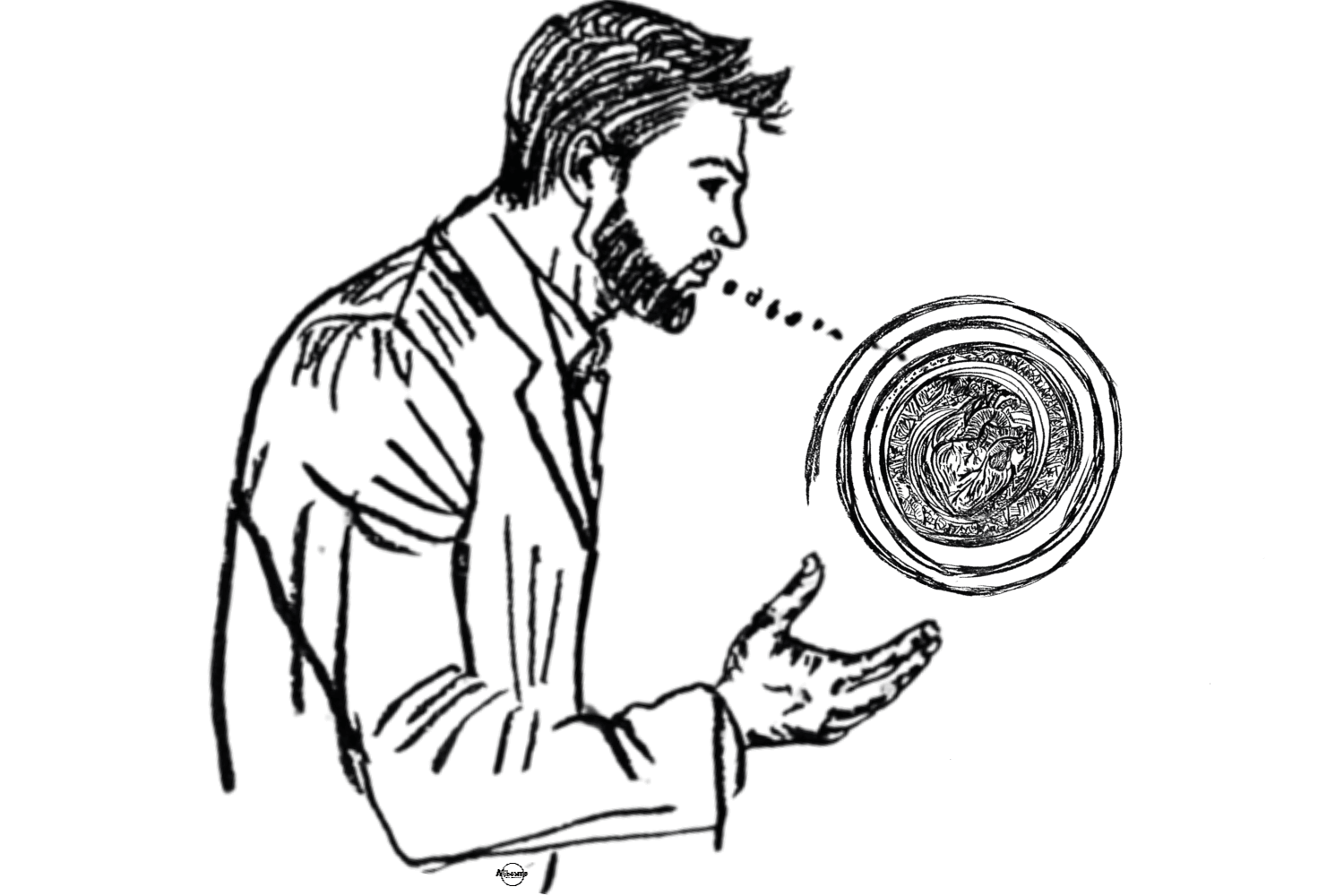
I found myself thinking about this while imagining a story set in the future. A brilliant engineer had invented the Wisdom Pocket, the world’s first artificial intelligence capable of predicting the immediate future. Its promise was extraordinary. It could analyze millions of possibilities in seconds and tell its owner exactly which decision would lead to the best outcome. No more hesitation. No more uncertainty. No more regrets.
An anxious man bought the device the very day it was released. The following morning, before making even the smallest decision, he asked, “What should I eat for breakfast to have the best possible day?” The device vibrated gently before replying, “Eat the green apple. If you choose the croissant, you will spill coffee on your shirt before your job interview.” He followed the instruction without hesitation. His interview went perfectly, he was hired immediately, and he walked out of the building convinced that the machine had changed his life forever.
From that moment on, he stopped making decisions for himself. Every morning began with another question. What should he wear? Which route should he take? Which book should he read? Which restaurant should he choose? Even ordinary conversations became guided by the device, which suggested the perfect greeting, the ideal response, and the safest choice in every situation. Over the following months, his life became almost flawless. Obstacles disappeared before they could happen. Embarrassing mistakes never occurred. Every decision led exactly where it was supposed to lead. For the first time in his life, he felt completely safe.
Then, one Saturday evening, everything changed. As he walked through the city, the device suddenly began vibrating frantically inside his pocket. “Warning,” it announced. “Stop immediately. Turn left. In two seconds, a passing car will splash dirty water across the sidewalk.” Without thinking, he obeyed. He avoided the puddle exactly as predicted, but the sudden movement caused him to collide with a young woman walking behind him. The books she was carrying scattered across the pavement. Embarrassed, he apologized repeatedly and knelt to help her gather them.
As they picked up the books together, their eyes met. They smiled almost at the same time. There was an immediate warmth between them, the kind of connection that appears without warning and cannot be explained by logic. Just as he gathered the courage to ask whether she would like to have a coffee with him, the device screamed from inside his pocket. “Absolute danger! Do not speak to her. If you begin a relationship, you will fall deeply in love. Three years from now you will argue about household chores. Seven years later you will divorce after adopting an unusually stubborn cat. Leave immediately.”
He looked down at the screen displaying graphs, probabilities, and carefully calculated predictions of future suffering. Then he looked back at the woman, who was still smiling patiently as she held the last of her books. For several quiet seconds, he stood between two futures. One promised safety, certainty, and protection from pain. The other offered no guarantees at all.
Finally, he smiled. He switched off the device, walked to the nearest trash bin, and dropped it inside. Turning back toward the woman, he asked, “Do you like cats? Because I have a feeling we’re about to live a beautifully imperfect story.”
The story may be fictional, but the question it raises feels deeply human. We spend so much of our lives trying to avoid mistakes, uncertainty, and possible suffering. Yet what if the very things we are trying to eliminate are also the things that give life its meaning? What if love, friendship, discovery, and personal growth all require a willingness to step into an unknown future? Perhaps a perfect life is not one where every decision is guaranteed to succeed. Perhaps it is one where we are free to choose, free to fail, and free to discover that some of our most beautiful moments could never have been predicted by any machine.
Why We Crave Certainty More Than Freedom
The man in the story did not buy the Wisdom Pocket because he loved technology. He bought it because he was afraid. Like many people, he was tired of wondering whether he was making the right decisions. Every choice carried the possibility of failure, embarrassment, regret, or loss. The promise of certainty offered him something he had been searching for his entire life: relief from the anxiety of not knowing what would happen next.
This desire is deeply human. From childhood, we learn to associate certainty with safety. We want to know that we chose the right school, accepted the right job, married the right person, or moved to the right city. Whenever life presents several possible paths, we naturally hope that one of them is objectively correct and that someone—or something—could simply point us toward it.
Modern life often strengthens this belief. We search for expert opinions before making purchases. We read countless reviews before choosing a restaurant. We compare salaries before accepting a job. We ask friends what they would do in our situation. The more important the decision feels, the stronger our desire becomes to eliminate uncertainty before acting.
At first glance, this seems perfectly reasonable. Careful thinking helps us avoid unnecessary mistakes. Seeking advice allows us to learn from other people’s experiences. Planning for the future is often a sign of responsibility rather than fear. The problem appears only when our search for certainty becomes so strong that we begin avoiding decisions unless success feels guaranteed.
This is exactly what happened to the man in the story. Little by little, he stopped trusting his own judgment. Every decision, no matter how small, became something the machine needed to approve first. Breakfast, clothing, conversations, travel routes, and even simple acts of politeness were no longer expressions of his own personality. They became optimized calculations designed to produce the safest possible outcome.
Without realizing it, he had exchanged something far more valuable than uncertainty. He had exchanged his freedom. Every decision still belonged to him in theory, yet in practice he had surrendered the responsibility of choosing. His life appeared perfect from the outside, but it was no longer truly his own. He was following the safest path, not necessarily the path he would have chosen for himself.
Perhaps this is the hidden danger of absolute certainty. The more we depend on guarantees, the less confidence we develop in our own ability to navigate uncertainty. Instead of learning to trust our judgment, adapt to unexpected situations, and recover from mistakes, we begin believing that safety is only possible when someone else provides the answers.
Life has never offered that kind of certainty. Every meaningful choice involves some degree of risk. We cannot know exactly how a career will unfold, how a friendship will evolve, or where a relationship may eventually lead. Yet these uncertainties are not flaws in the human experience. They are part of what gives our choices significance. If every outcome were already guaranteed, choosing would become little more than following instructions.
The man believed he was purchasing freedom from anxiety. In reality, he was gradually giving away something much greater. He was giving away the opportunity to discover who he could become through the unpredictable journey of making his own choices.
The Illusion of Perfect Decisions
One of the most fascinating aspects of the story is that the machine never actually lied. Every prediction it made was accurate. The green apple prevented the coffee stain. The alternate route avoided delays. The carefully selected words created smooth conversations. The device delivered exactly what it promised: the safest possible decision in every situation. Yet despite this remarkable success, something essential slowly disappeared from the man’s life.
At first, he believed he was becoming wiser. In reality, he was becoming more dependent. Each correct prediction strengthened his confidence in the machine while quietly weakening his confidence in himself. Whenever a new decision appeared, he no longer asked what felt meaningful or aligned with his values. His only question became, “What produces the best outcome?” Over time, success stopped being something he created through judgment and experience. It became something he borrowed from an algorithm.
This reflects a common misunderstanding about decision-making. Many people assume that a good decision is simply one that produces a good result. Life, however, is rarely that simple. Two people can make the same thoughtful decision and experience completely different outcomes because chance, timing, and circumstances also play important roles. Likewise, someone can make a poor decision and still experience a fortunate result. Outcomes alone cannot tell us whether a decision was wise.
The Wisdom Pocket ignored this complexity. It reduced every choice to a mathematical calculation whose only objective was to minimize future discomfort. Yet human life cannot be measured solely by efficiency. Some of the most meaningful experiences we have begin with decisions that appear irrational, uncertain, or even risky. Moving to a new city, starting a business, expressing love, changing careers, or pursuing a lifelong dream rarely comes with guarantees. If we waited until success became certain, many of those experiences would never happen at all.
The machine also overlooked another important truth. A decision is valuable not only because of where it leads but because of what it teaches us. Every choice, whether successful or disappointing, helps us develop judgment, resilience, patience, and self-understanding. These qualities cannot be downloaded or predicted. They are built through experience, often by making imperfect decisions and learning from their consequences.
By removing uncertainty from every choice, the device also removed the opportunity to develop wisdom. The man no longer reflected on his experiences because there was nothing left to question. He no longer trusted his intuition because someone else had already calculated the answer. Gradually, his life became more predictable, but he himself became less capable.
This is the paradox at the heart of the story. The machine made better decisions than the man ever could, yet it also prevented him from becoming a wiser person. It protected him from mistakes, but it also protected him from growth. It delivered perfect outcomes while quietly taking away the imperfect experiences that help shape a meaningful life.
Perhaps the goal of life has never been to make perfect decisions. Perhaps the goal is to become the kind of person who can face imperfect decisions with courage, humility, and the willingness to keep learning. Those qualities cannot be predicted by any algorithm because they are born from the very uncertainty we so often try to avoid.
Why Mistakes Are Essential for Personal Growth
When the Wisdom Pocket promised a life without mistakes, it sounded like the greatest invention humanity had ever created. Most people spend years trying to avoid failure. They fear making the wrong decision, saying the wrong thing, choosing the wrong career, or trusting the wrong person. Mistakes are often viewed as obstacles standing between us and the life we truly want. Yet what if mistakes are not interruptions to growth but one of its most important sources?
Looking back, many people realize that their greatest lessons did not come from the moments when everything worked perfectly. They came from disappointments they never wanted to experience. A failed project taught them resilience. A painful breakup revealed what they truly valued in a relationship. A rejected job application pushed them toward an opportunity they would never have considered otherwise. At the time, these experiences felt like failures. Only later did they recognize how profoundly those moments had shaped them.
The man in the story never had the opportunity to experience this kind of learning. Every difficult decision was made for him before he even had the chance to think. Every obstacle was removed before he could discover how to overcome it. Every mistake was prevented before it could teach him something new about himself. His life became increasingly successful, yet his ability to navigate uncertainty remained frozen because he never needed to develop it.
This reveals an important truth about growth. Confidence does not usually come from always being right. It comes from discovering that we can survive being wrong. Every challenge we overcome quietly strengthens our belief that we are capable of facing future difficulties. We begin trusting ourselves not because life becomes predictable but because we have learned that we can adapt when life surprises us.
Children learn this naturally. They fall while learning to walk, struggle while learning to read, and make countless mistakes while discovering how the world works. We do not expect them to succeed perfectly on the first attempt because we understand that mistakes are part of learning. Yet as adults, many of us forget this lesson. We begin treating every error as evidence that we have failed rather than evidence that we are still growing.
The Wisdom Pocket reflected this fear perfectly. Its entire purpose was to eliminate failure. Yet by doing so, it also eliminated one of life’s greatest teachers. The man no longer developed patience because nothing tested it. He no longer developed courage because nothing required it. He no longer developed resilience because every disappointment was removed before it could happen. His life became easier, but he stopped becoming stronger.
Perhaps this is why people who have lived through difficult experiences often possess a quiet confidence that cannot be taught in a classroom or programmed into a machine. Their confidence is not based on the belief that everything will go well. It is based on the knowledge that even when life becomes difficult, they have already proven to themselves that they can continue moving forward.
The irony is that the very experiences we spend so much energy trying to avoid often become the experiences we value most in hindsight. They challenge our assumptions, deepen our understanding, and reveal strengths we never knew we possessed. Without mistakes, we might enjoy greater comfort, but we would also miss many of the opportunities that allow us to become wiser, more compassionate, and more resilient human beings.
Perhaps personal growth has never depended on making perfect decisions. Perhaps it depends on having the courage to make imperfect ones, learning from them with humility, and trusting that each experience, whether joyful or painful, is quietly shaping the person we are becoming.
The Relationship Between Freedom and Uncertainty
When the man threw the Wisdom Pocket into the trash, he did something that many people would consider irrational. He willingly abandoned a device that had never made a mistake. From a purely logical perspective, keeping the machine would have been the safer decision. It could continue protecting him from disappointment, embarrassment, and countless painful experiences. Yet at that moment, he realized that safety was no longer enough. He wanted something the machine could never provide: the freedom to choose his own life.
Freedom and uncertainty have always been inseparable. Every genuine choice involves the possibility that things may not unfold as we hope. If every outcome were guaranteed in advance, our decisions would lose much of their meaning. Choosing only becomes significant because we step into the unknown without knowing exactly where the path will lead. The uncertainty is not a flaw in the process. It is what gives the process its value.
This is why many of life’s most meaningful moments cannot be planned with complete certainty. Falling in love, changing careers, moving to a new place, becoming a parent, starting a creative project, or trusting someone new all involve risks that no algorithm can fully eliminate. We move forward because something inside us tells us the possibility of growth is worth the possibility of disappointment.
The Wisdom Pocket viewed uncertainty as a problem that needed to be solved. Human life suggests something different. Uncertainty is often the space where curiosity, creativity, courage, and hope are born. When we cannot predict the future, we begin imagining possibilities. We adapt. We improvise. We discover strengths that would have remained hidden if every step had already been decided for us.
The man had spent months believing that freedom meant having access to the perfect answer. Gradually, he discovered the opposite. Following instructions, even flawless ones, was not freedom at all. Freedom required accepting responsibility for his own choices, including the possibility that some of them would lead to pain. The burden of uncertainty was also the privilege of being fully alive.
This idea can feel uncomfortable because uncertainty naturally creates anxiety. Our minds prefer clear answers over unanswered questions. We want reassurance that we are making the right decision before we commit ourselves. Yet life rarely offers that kind of certainty. Instead, it asks us to act with incomplete information, trusting that we will learn, adapt, and continue moving forward regardless of the outcome.
Perhaps this is why courage is often misunderstood. Courage is not the absence of fear. It is the willingness to keep choosing despite uncertainty. Every meaningful act of love, creativity, forgiveness, or personal growth requires this kind of courage. We move forward without guarantees because we recognize that some experiences are worth the risk.
The man finally understood this as he looked away from the glowing screen and toward the smiling woman standing before him. The machine could predict years of possible arguments, disappointments, and heartbreak. What it could never calculate was the joy of shared laughter, quiet mornings together, unexpected adventures, or the countless small moments that make a relationship meaningful. Those experiences existed only because the future remained unwritten.
Perhaps freedom has never meant choosing the safest path. Perhaps it means accepting that uncertainty will always accompany the choices that matter most. When we stop demanding guarantees from life, we make room for surprise, discovery, and experiences that no prediction could ever fully capture. In that sense, uncertainty is not the enemy of freedom. It is one of its greatest expressions.
Why Love Cannot Be Calculated
The moment the Wisdom Pocket told the man to walk away from the young woman revealed the greatest limitation of the machine. It could calculate probabilities, predict arguments, estimate the likelihood of divorce, and even anticipate years of future disappointment. What it could not measure was the value of the journey itself. It saw only the pain that might one day arrive. It completely ignored everything that would happen before then.
This is one reason love refuses to fit neatly into formulas. Relationships are not mathematical equations where one difficult ending automatically erases every meaningful moment that came before it. Even relationships that eventually end can shape our lives in beautiful ways. They teach us patience, vulnerability, forgiveness, courage, and compassion. They create memories, transform our perspectives, and sometimes introduce us to parts of ourselves we would never have discovered otherwise.
The Wisdom Pocket reduced the entire relationship to its final outcome. Because it predicted a divorce seven years later, it concluded that the relationship should never begin. From the machine’s perspective, avoiding future suffering was the highest possible goal. From a human perspective, that conclusion feels strangely incomplete. Seven years of shared experiences cannot be dismissed simply because they do not last forever.
Many of the most meaningful experiences in life are temporary. Childhood eventually ends. Friendships sometimes drift apart. Children grow up and leave home. Careers change. Loved ones pass away. Yet we do not conclude that these experiences were meaningless simply because they were not permanent. Their value comes from the way they shaped us while they existed.
Love follows the same principle. When we enter a relationship, we cannot know exactly how the future will unfold. We cannot guarantee lifelong happiness, nor can we eliminate the possibility of heartbreak. Yet this uncertainty does not diminish the beauty of genuine connection. In many ways, it makes love even more precious because we recognize that every shared moment is a gift rather than a certainty.
The man understood something the machine never could. If he walked away simply to avoid possible pain years in the future, he would also walk away from every conversation, every laugh, every quiet evening, every lesson, and every act of love that might exist between now and then. He would not merely be avoiding heartbreak. He would be avoiding life.
This does not mean we should ignore obvious warning signs or remain in unhealthy relationships. Wisdom still matters. Healthy choices still matter. The point is that no relationship can ever be guaranteed to remain free from disappointment. Trying to eliminate every possible risk would eventually eliminate every possibility for genuine intimacy as well.
Perhaps this is why love has always required courage. To love another person is to accept uncertainty. It is to recognize that another human being has their own freedom, their own choices, and their own unpredictable journey. Love asks us to remain open despite the absence of guarantees. It invites us to value connection more than certainty.
As the man smiled and asked the young woman whether she liked cats, he chose something no algorithm could ever recommend. He chose a future that could not be fully predicted. It might bring joy. It might bring sorrow. Most likely, it would bring both. And perhaps that is exactly what makes a human life so deeply meaningful. The experiences that change us most are rarely the ones that are perfectly safe. They are the ones we choose because they are worth the uncertainty.
What Psychology Says About Decision-Making and Uncertainty
The dilemma faced by the man in the story reflects a question psychologists have explored for decades. Why do human beings often crave certainty even when uncertainty is an unavoidable part of life? Research suggests that our brains are naturally designed to reduce uncertainty because uncertainty requires more mental effort. When we know exactly what will happen next, we feel safer. When the future is unclear, our minds instinctively begin searching for ways to regain a sense of control.
This tendency can be helpful in situations involving genuine danger. Planning ahead, gathering information, and learning from previous experiences often improve our decisions. However, psychologists also warn that an excessive need for certainty can become limiting. When people begin avoiding every situation that contains uncertainty, they may also begin avoiding opportunities for growth, meaningful relationships, creativity, and personal development.
Another important finding is that confidence does not usually develop from having perfect certainty before acting. Instead, it grows through experience. Every time we face an uncertain situation, make a thoughtful decision, and discover that we can handle the outcome—whether it is positive or disappointing—we strengthen our belief in our own ability to navigate life. In other words, confidence comes less from predicting the future and more from learning that we can adapt to it.
Psychologists also distinguish between control and the illusion of control. We often believe that if we gather enough information, think long enough, or analyze every possible outcome, we can eliminate uncertainty altogether. In reality, many aspects of life remain outside our control. Other people’s choices, unexpected events, changing circumstances, and simple chance continue to shape our lives regardless of how carefully we plan.
The man in the story gradually confused prediction with wisdom. The Wisdom Pocket gave him control over small events, but it could not teach him how to live with uncertainty. Instead of becoming more resilient, he became increasingly dependent on certainty. Ironically, the more predictable his life became, the less capable he felt of making decisions without external guidance.
Research on psychological resilience suggests almost the opposite approach. Resilient people do not believe they can predict every challenge they will face. They trust their ability to respond when those challenges arrive. Their confidence is rooted not in certainty but in adaptability. They understand that while they cannot control every outcome, they can continue learning, adjusting, and growing throughout their lives.
This perspective transforms the way we think about difficult decisions. Instead of asking, “How can I guarantee that nothing goes wrong?” we begin asking, “How can I make the best decision I can with the information I have today?” This shift removes the impossible burden of predicting the future and replaces it with something far healthier: trusting our judgment while accepting that uncertainty will always remain part of being human.
If you would like to learn more about decision-making, resilience, and adapting to uncertainty, the American Psychological Association offers helpful resources on stress, resilience, and psychological well-being.
External Resource: American Psychological Association — Building Your Resilience
Perhaps this is the lesson the machine could never understand. A meaningful life is not built by eliminating every uncertain moment. It is built by developing the confidence to move forward despite uncertainty. The future will always contain unanswered questions, but our ability to face them with curiosity, courage, and flexibility is one of the greatest strengths we can develop.
Journaling: Learning to Trust Your Own Choices
The man in the story believed the Wisdom Pocket would free him from anxiety by making every decision for him. For a while, it seemed to work. Yet the more he depended on the machine, the less he trusted himself. Eventually, he realized that confidence is not built by always knowing the right answer. It is built by discovering that we can continue moving forward even when we do not know what the future holds.
Many of us are searching for certainty in similar ways. We ask for endless advice, read countless opinions, compare every possible option, and postpone important decisions while waiting for absolute reassurance. Although gathering information can be helpful, there comes a point when no additional certainty is possible. At that moment, we are left with something far more important than perfect knowledge: our willingness to choose.
This journaling exercise is an opportunity to reflect on your relationship with uncertainty. Rather than asking whether your past decisions were perfect, ask what they taught you. Every meaningful choice carries some risk, but every choice also carries the possibility of growth. The goal is not to become fearless. The goal is to become someone who can act wisely without demanding complete certainty.
Find a quiet place, open your journal, and spend a few minutes reflecting on the questions below. Answer honestly. There are no perfect responses, only opportunities to understand yourself more deeply.
- What important decision have I been postponing because I want more certainty?
- Do I trust my own judgment, or do I constantly seek reassurance from others?
- What is one mistake that ultimately helped me become a wiser person?
- Have I ever missed an opportunity because I was waiting for the perfect moment?
- What part of uncertainty scares me the most?
- When have I surprised myself by handling a difficult situation better than I expected?
- What would I choose today if I knew perfection was impossible?
- How can I remind myself that growth often begins where certainty ends?
As you write, you may notice that many of the experiences you value most were impossible to predict in advance. Some of the people who changed your life appeared unexpectedly. Some of your greatest lessons came from decisions that felt uncertain at the time. Looking back, it becomes clear that uncertainty was not standing in the way of your life. It was quietly shaping it.
If you would like to continue this reflection, you may find the Self-Discovery Questions Journal helpful for exploring your values, priorities, and decision-making process. You can also use the Emotional Check-In Wheel to better understand the emotions that arise when facing uncertainty or important life choices.
The purpose of this exercise is not to eliminate doubt from your life. Doubt is part of being human. The goal is to strengthen your ability to make thoughtful decisions without needing guarantees that no one can truly provide. Sometimes the most meaningful life is not the one with the fewest mistakes. It is the one where we have the courage to choose our own path, even when we cannot see exactly where it will lead.
Frequently Asked Questions About Decision-Making and Uncertainty
Why do I struggle so much with making decisions?
Many people struggle with decisions because every choice involves uncertainty. We naturally want reassurance that we are making the right decision, especially when the consequences feel important. While careful thinking is valuable, waiting for complete certainty often leads to unnecessary stress because certainty rarely exists.
Can making the wrong decision ruin my life?
Some decisions have significant consequences, but very few determine the rest of your life forever. Most choices lead to new opportunities, new lessons, and new possibilities. Even when a decision turns out differently than expected, people often adapt, learn, and continue growing.
Why am I always afraid of making mistakes?
Fear of mistakes is often connected to the belief that mistakes define our worth or permanently damage our future. In reality, mistakes are a natural part of learning. They help us develop judgment, resilience, and confidence that cannot be gained through success alone.
How can I become more confident when making decisions?
Confidence grows through experience rather than certainty. Instead of trying to predict every possible outcome, focus on making thoughtful decisions based on the information you currently have. Over time, successfully navigating both good and difficult outcomes strengthens trust in your own judgment.
Should I always listen to advice before making important choices?
Advice can be extremely helpful because it allows us to learn from other people’s experiences. However, advice should inform your decision rather than replace it. No one else fully understands your values, goals, or circumstances. Ultimately, the responsibility for your life belongs to you.
Why does uncertainty make me anxious?
Uncertainty activates the brain’s natural desire for safety and predictability. When the future is unknown, our minds often imagine possible risks in an attempt to prepare us. While this response is normal, it becomes limiting when it prevents us from pursuing meaningful opportunities.
Can a perfect decision really exist?
Probably not. Every decision involves trade-offs, unknown variables, and circumstances beyond our control. A thoughtful decision made with good intentions is often far more realistic than searching for a perfect one that guarantees success.
How do I know when I have enough information to decide?
A helpful question is whether additional information is likely to change your decision or simply delay it. There comes a point when gathering more opinions no longer increases wisdom but only postpones action. Recognizing that point is an important part of healthy decision-making.
Is it possible to live without regrets?
Probably not completely. Every path we choose means leaving another path unexplored. Rather than trying to eliminate all regret, many people find greater peace by making thoughtful decisions that reflect their values and accepting that uncertainty is part of every meaningful life.
What is the healthiest way to approach uncertainty?
Instead of asking, “How can I guarantee that nothing goes wrong?” try asking, “How can I make the wisest decision I can today?” This mindset shifts your focus from controlling the future to trusting your ability to adapt, learn, and grow regardless of what happens next.
Final Reflection
As I think back to the final scene, I do not remember the sophisticated technology or the astonishing predictions. I remember a simple moment. A man standing between certainty and possibility, holding a machine that promised a painless future while looking at a woman whose smile promised nothing except uncertainty. In those few seconds, he was not choosing between technology and love. He was choosing between a life that had already been calculated and a life that still had room to surprise him.
It is tempting to believe that happiness comes from making perfect decisions. We spend so much time searching for the right answer that we sometimes forget an important truth: life is not a puzzle with only one correct solution. Every path contains its own joys, disappointments, unexpected opportunities, and difficult lessons. Trying to eliminate every possible mistake may protect us from some pain, but it also protects us from many of the experiences that make us who we are.
The Wisdom Pocket understood probability, but it could never understand meaning. It could calculate the likelihood of an argument, estimate the chance of heartbreak, and predict years of future events. What it could never measure was the laughter shared over ordinary dinners, the comfort of holding someone’s hand after a difficult day, the lessons learned through forgiveness, or the quiet happiness of building a life together despite its imperfections. Those moments cannot be reduced to statistics because their value is deeply human.
Perhaps this is why we should be careful whenever we become obsessed with certainty. Whether we rely on endless advice, constant reassurance, or the illusion that one perfect choice exists somewhere ahead of us, we risk forgetting that uncertainty is not an obstacle standing in the way of life. It is one of the conditions that makes life possible. Without uncertainty there would be no courage, no discovery, no surprise, and no genuine freedom.
The man did not throw the machine away because he rejected wisdom. He threw it away because he finally understood that wisdom is not the same as prediction. Real wisdom is knowing that we cannot control everything and choosing to live fully anyway. It is trusting ourselves enough to love despite the possibility of heartbreak, to dream despite the possibility of failure, and to begin new chapters without knowing exactly how they will end.
None of us can predict the future with complete accuracy. We will make decisions that work beautifully and others that disappoint us. We will meet people who stay for a lifetime and others who are only part of one chapter. We will experience joy, loss, success, failure, certainty, and doubt. None of these experiences mean we chose the wrong path. They simply mean we are living a human life.
Perhaps the most meaningful question is not, “How can I avoid every mistake?” Perhaps it is, “What kind of person do I want to become through the choices I make?” That question cannot be answered by any algorithm because it belongs entirely to us.
As the man walked away beside the woman, leaving the Wisdom Pocket behind forever, he accepted something that many of us spend years trying to learn. A beautifully imperfect life will always be richer than a perfectly predictable one. The future does not need to be guaranteed to be worth walking toward. Sometimes all it needs is the courage to take the first step and the willingness to let the story unfold one imperfect choice at a time.