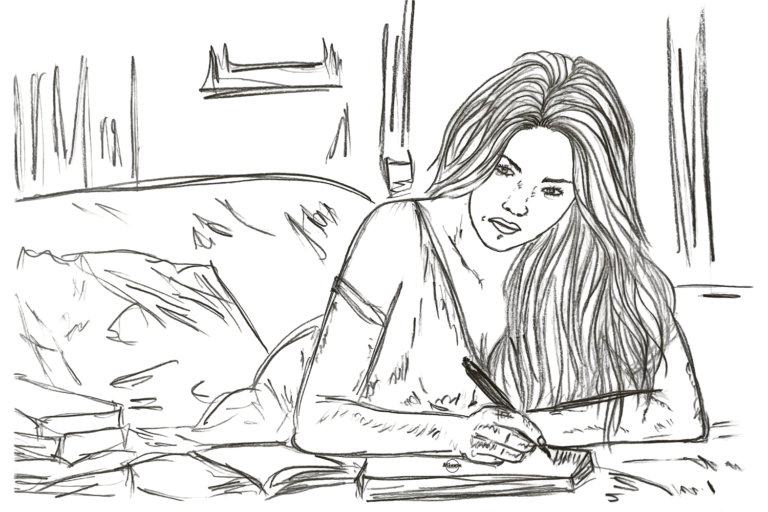
Why Do Some Spaces Feel Comfortable Almost Immediately?

Comfort is not only about how a room looks. It can emerge from the way a space fits our senses, habits, expectations, and needs.
Why Do Some Spaces Feel Comfortable Almost Immediately?
Sometimes we enter a room and like being there almost immediately. Nothing extraordinary has happened. We may not even be able to identify what we like about it. The chair is comfortable, the light feels pleasant, the room is neither too warm nor too cold, objects seem to be where we expect them to be, and the space somehow feels easy to occupy. Then we enter another room that is objectively attractive—carefully decorated, expensive, clean, perhaps even impressive—and still feel slightly uncomfortable. We sit down but never quite settle. We notice the brightness, the echo, the temperature, the lack of somewhere convenient to put our belongings, or simply a vague sense that we do not know how to exist naturally in the space. Why can two rooms that look equally good create such different experiences?
We often talk about comfortable spaces as though comfort were a decorating style. We imagine warm colors, soft blankets, candles, plants, books, cushions, or particular kinds of furniture. These things can certainly contribute to an atmosphere, but none of them guarantees comfort. A minimalist room can feel deeply comfortable to one person and strangely empty to another. A room filled with objects can feel welcoming to someone and overwhelming to someone else. Bright daylight may energize one person while making another wish for a curtain. Even the same room can feel pleasant at one time of day and uncomfortable at another.
That is because experiencing a space involves much more than looking at it. We hear it, move through it, touch its surfaces, notice its temperature, navigate around furniture, respond to smells, judge whether we have enough privacy, and continuously make small predictions about what will happen around us. We also bring our habits, memories, preferences, activities, and expectations into the room. Comfort is therefore less like a single feature that a home possesses and more like an interaction between a person and an environment.
We Experience Rooms With More Than Our Eyes
Interior design is highly visual, so it is easy to evaluate a room primarily through photographs. But photographs remove many of the characteristics that influence what being physically present in a space is actually like. A photograph cannot fully communicate whether a chair becomes uncomfortable after twenty minutes, whether traffic can be heard through the window, whether the air feels stuffy, whether the overhead light creates glare on a screen, or whether people constantly have to squeeze around a badly positioned table.
In real life, these details accumulate. Imagine a beautiful reading corner beside a large window. In a photograph, it may look ideal. But if direct afternoon sunlight repeatedly falls onto the page, the chair has no support, and there is nowhere nearby to put a drink, the corner may rarely be used. Meanwhile, an ordinary chair in another part of the house might become someone’s favorite place because the light is right, the temperature is comfortable, and everything they normally need is within reach.
This helps explain why visual appeal and lived comfort can diverge. Appearance answers something like, “Do I enjoy looking at this environment?” Comfort asks a much broader set of questions: “What is it like to remain here? Can I do what I need to do easily? What are my senses dealing with? How much adjustment does the environment require from me?” A room can succeed at one and fail at the other.
We can notice this outside the home as well. A café might have beautiful furniture but music loud enough to make conversation difficult. A waiting room might look modern but provide nowhere to sit without facing directly toward strangers. An office might appear spacious but have constant background noise. A hotel room might look luxurious while requiring a guest to cross the room to find the only accessible electrical outlet. None of these inconveniences necessarily ruins the environment, but each changes the experience of occupying it.
Comfort Often Comes From Many Small Frictions Being Absent
Some spaces feel easy because they do not repeatedly ask us to adapt to them. The door opens without something blocking it. There is enough room to move around the bed. Frequently used objects are accessible. The light switch is where we expect to find it. We can sit without needing to rearrange several things first. We can place a bag somewhere instead of leaving it awkwardly on the floor. None of these features is dramatic enough to make a room memorable by itself, yet together they can make the environment feel remarkably effortless.
Small environmental frictions become particularly noticeable through repetition. Having to move one object every time we open a cupboard takes only seconds, but after doing it hundreds of times, the inconvenience becomes part of our experience of the room. A kitchen counter that looks wonderfully clear may be less convenient if every appliance used daily has to be retrieved from a distant cabinet. A beautifully arranged desk may become frustrating if its layout leaves no comfortable position for actually working.
This distinction between looking organized and functioning smoothly matters because the spaces we inhabit are not static displays. They are environments in which actions happen repeatedly. We enter, leave, cook, sleep, search for things, dress, clean, talk, work, rest, carry objects from one place to another, and perform countless routines. A space that supports those routines can become comfortable partly because we stop having to think about the environment itself.
In that sense, one sign of a well-fitting environment may be how little attention certain parts of it demand. We do not celebrate the drawer that opens properly every morning. We simply use it. We notice it when it jams. We rarely think about having enough space to pull out a chair until a table is positioned too close to a wall. Functioning environments can become almost invisible, whereas badly fitting ones repeatedly announce themselves through interruption.
Familiarity Can Make a Place Easier to Navigate
A familiar space has another advantage: we already know how it works. We know which floorboard makes noise, where the glasses are kept, how far the bathroom door needs to be pushed before it stays open, which window catches the afternoon sun, where the phone charger usually is, and which chair is most comfortable. Much of this knowledge is so ordinary that we do not consciously think about it.
In an unfamiliar environment, even simple actions require more observation. At someone else’s house, we may need to ask where to leave our coat, which door leads to the bathroom, whether shoes are worn indoors, where the light switch is, or whether a particular chair is meant to be used. In a hotel, we may spend the first evening discovering how the shower works, where the outlets are, or which switch controls which lamp. None of these tasks is particularly difficult, but the environment has not yet become automatic.
With repetition, navigation often becomes easier. We stop searching for things because we know where they are. We learn the dimensions of the space well enough to move through it without deliberate attention. We know what sounds are normal. We develop routines around the environment. The place becomes more predictable.
This is one reason a modest home can sometimes feel more comfortable than a spectacular unfamiliar space. The familiar home may not have better furniture, better lighting, or better architecture. But it contains knowledge. We know how to use it.
But Familiar Does Not Automatically Mean Comfortable
Familiarity should not be confused with comfort itself. People can become very familiar with environments they dislike. A noisy apartment can become predictable without becoming pleasant. An uncomfortable chair does not eventually become ergonomically suitable simply because we have owned it for years. A room can contain familiar objects while still being too hot, crowded, dark, exposed, or difficult to use.
There is also an important difference between recognizing something and preferring it. Repeated exposure can sometimes make stimuli easier to process or increase liking under certain conditions, but it would be an overstatement to turn this into a rule that familiarity always produces preference. Context, prior associations, intensity, individual differences, and the qualities of the environment itself still matter.
This distinction is useful because “it feels like home” can describe several different experiences. Sometimes we mean that a place is physically comfortable. Sometimes we mean that it contains familiar objects. Sometimes we mean that we understand its routines. Sometimes we mean that we have personal memories associated with it. And sometimes we simply mean that we do not need to monitor ourselves as carefully there as we might in an unfamiliar social environment.
Those experiences can overlap, but they are not identical. Separating them helps us understand why reproducing the visible appearance of a comfortable place does not necessarily reproduce the feeling.
Personal Objects Do More Than Decorate a Room
Consider two shelves containing exactly the same number of objects. One has been styled by someone who does not know you: attractive books, a vase, a framed print, and several decorative objects chosen because they look harmonious together. The other contains an old book you have read several times, a photograph from a meaningful trip, a slightly imperfect object someone gave you, and something you bought years ago simply because you liked it.
Visually, the professionally arranged shelf might be more coherent. Personally, however, the second shelf carries information the first one cannot. Its objects connect the physical environment with experiences, relationships, interests, and memories that extend beyond the room.
This does not mean that every possession needs emotional significance or that accumulating sentimental objects automatically creates a comfortable home. Too many belongings can introduce practical problems of their own, and some people strongly prefer visually simple environments. The important point is that objects are not experienced only according to their shape, color, or price. We also know what they are to us.
A chipped mug can be more pleasant to use than an expensive new one because we like its weight and have reached for it every morning for years. A plain blanket may matter because it belonged to someone important. A drawing made by a child can occupy a more valued place than professionally produced art. Someone else entering the room sees objects; the person who lives there may see histories.
Predictability Can Change How Demanding a Space Feels
Environmental unpredictability can require attention. An intermittent mechanical noise may be more distracting than a steady hum because we keep noticing when it begins and ends. A light that occasionally flickers draws attention precisely because we cannot fully ignore it. A room in which people frequently pass behind us may feel different from one where movement occurs in predictable areas.
This does not mean that every comfortable environment must be silent, static, or perfectly controlled. Many people enjoy busy cafés, lively family homes, open windows, changing sunlight, music, or the sounds of a city. What matters is not simply the amount of stimulation but also its type, relevance, predictability, and fit with what we are trying to do.
The same person may enjoy loud music while cooking and find it unbearable while trying to understand a complicated document. A busy kitchen may feel warm during dinner with friends and distracting during a work call. Bright light may be welcome in the morning and unpleasant late at night. Comfort is therefore not a fixed property of a stimulus. It depends partly on the relationship between the environment and the activity taking place within it.
The Same Room Can Work for One Activity and Fail for Another
This is where the idea of a universally comfortable room begins to break down. A space that is excellent for conversation may not be excellent for concentration. A bedroom designed primarily for sleep may not work well as an office. A large open room can make social gatherings easier while providing little acoustic separation for people who need to perform different activities at the same time.
Instead of asking only whether a room is comfortable, it can therefore be more useful to ask: comfortable for what? Reading requires different conditions from entertaining guests. Cooking requires different movement patterns from resting. Working at a computer introduces questions about seating, screen position, glare, noise, and access to frequently used objects that may barely matter during a weekend breakfast.
This also explains why copying somebody else’s “perfect” room can produce disappointing results. Their environment may be optimized around routines that are completely different from ours. A person who eats outside most days may value an enormous kitchen less than someone who cooks three meals at home. Someone who works remotely may need a dedicated work surface more than someone who leaves home every morning. A person who loves hosting groups may organize seating differently from someone who rarely has visitors.
Before decoration, then, there is a more basic relationship between space and behavior. We ask environments to support our lives. When they support the life we actually live rather than the one a room is supposed to represent, comfort can become much easier to understand.
Lighting Changes More Than the Appearance of a Room
Light is one of the clearest examples of why a space cannot be understood through decoration alone. Two rooms containing almost identical furniture can feel dramatically different depending on the amount, direction, intensity, and timing of their light. A room flooded with daylight may feel inviting in the morning but uncomfortable when direct afternoon sun creates glare and heat. A dim lamp may be pleasant while relaxing in the evening but frustrating when trying to read small print or prepare food.
We sometimes talk about lighting as though there were one universally comfortable setting: warm light is cozy, bright light is energizing, dim light is relaxing. In practice, usefulness matters. The question is not simply whether light looks pleasant but whether it helps us see what we need to see without creating unnecessary discomfort. A kitchen counter may need strong task lighting even if softer lighting is preferred elsewhere. A desk beside a window may benefit from daylight until the sun begins reflecting directly from a computer screen. A bedroom may need several lighting options because getting dressed, reading, searching for something, and preparing for sleep are different activities.
Placement matters too. A single powerful ceiling light illuminates a room differently from several smaller sources positioned near the activities taking place there. Shadows, reflections, contrast between bright and dark areas, and the direction from which light reaches our eyes can all influence whether an environment is easy to use. This is why adding more light does not automatically improve a room. Sometimes the problem is not insufficient light but light arriving in the wrong place.
Natural light also changes throughout the day and across seasons. A room that works beautifully on a cloudy morning may become too bright during a summer afternoon. Rather than treating lighting as a permanent characteristic of a space, it may be more realistic to think of it as something that changes with time. Curtains, blinds, movable lamps, and multiple light sources are useful partly because they allow the environment to adapt rather than forcing one setting to serve every situation.
Sound Can Make an Attractive Space Difficult to Occupy
Sound is even easier to overlook because it disappears completely from photographs. A room can look serene while containing an air conditioner that repeatedly switches on, traffic noise from a nearby street, conversations from another room, footsteps from the apartment above, or an echo that makes every movement seem louder.
Again, volume alone does not explain the experience. A predictable background sound can sometimes become easier to ignore than a quieter but irregular one. A refrigerator humming steadily may disappear from awareness, while an occasional unexplained click keeps attracting attention. Speech can be particularly difficult to disregard when we are trying to concentrate because it contains potentially meaningful information. Even when we are not deliberately listening, recognizable words may compete for attention in ways that a more uniform background sound does not.
The activity matters here as well. A lively room full of overlapping conversations can be exactly what someone wants at a celebration and exactly what they do not want while reading. Children playing in another room may be reassuring in one situation and distracting in another. Complete silence can feel restorative to some people while making others unusually aware of every tiny sound.
Instead of asking whether a home is quiet enough, it can therefore be more useful to notice where particular sounds occur, when they occur, and what we are usually trying to do at the same time. Sometimes the solution to an uncomfortable environment is not a major redesign. It may be moving a desk away from a shared wall, adding a rug to a room that echoes, closing a door during concentrated work, or reserving a quieter part of the home for activities that require sustained attention.
Temperature and Air Are Part of Comfort Too
A beautifully arranged room becomes difficult to appreciate when we are too hot, too cold, or uncomfortable with the air. Thermal comfort is particularly interesting because people sharing the same environment can disagree strongly about it. One person opens a window while another reaches for a sweater. Someone who has just climbed several flights of stairs may experience the room differently from someone who has been sitting still for an hour.
This variability is a useful reminder that comfort is not entirely contained within the environment. Clothing, activity, airflow, humidity, sunlight, individual preference, and other factors can influence how the same conditions are experienced. That makes the search for a single perfect room temperature less straightforward than it appears.
Small forms of personal adjustment can therefore matter considerably. Being able to move away from direct sunlight, open or close a window when appropriate, add a blanket, change seats, or adjust airflow gives us ways to respond when conditions change. A room that cannot be modified may be comfortable only under a narrow set of circumstances, whereas an adaptable room can accommodate more variation.
This adaptability becomes especially important in shared homes because different people do not necessarily want the same sensory environment. Designing for comfort is partly about recognizing those differences rather than assuming that one person’s preference represents the correct setting for everyone.
Having Some Control Over a Space Can Change the Experience
Imagine two rooms with exactly the same temperature, light, sound, and furniture. In one, you can open the curtain, move the chair, adjust the lamp, close the door, and decide whether music is playing. In the other, none of those things can be changed. Even before any adjustment is actually necessary, the two environments may not feel identical because one gives you options.
Control does not have to mean complete ownership. A person can feel comfortable in a rented apartment, shared home, office, library, hotel, or café. What often matters is whether there are reasonable ways to adapt the immediate environment to what is needed. Can you choose where to sit? Can you reduce glare? Can you create enough privacy for a phone call? Can you reach what you regularly use? Can you alter the environment when circumstances change?
When small adjustments are possible, discomfort does not always become a problem we simply have to tolerate. If the sun moves, we close a curtain. If we are cold, we add a layer. If a chair is awkwardly positioned, we move it. The environment becomes responsive to us rather than entirely fixed.
This also helps explain why personalization can matter even when it is modest. Choosing where to place a photograph, which mug to use, how to organize a desk, or which side of a room to sit on creates a small relationship between preference and environment. The effect does not require an elaborate renovation. Sometimes the ability to make ordinary decisions about a space is itself part of feeling settled within it.
Visual Simplicity Is Not Comfortable for Everyone
There is a common temptation to turn personal environmental preferences into universal psychological rules. One person feels calmer after removing objects from a crowded room and concludes that less visual information is inherently better. Another person feels happiest surrounded by books, photographs, art, textiles, and collected objects and concludes that an empty room lacks warmth. Both may be accurately describing themselves without discovering a rule for everybody else.
Visual complexity can have costs when it interferes with finding things, moving easily, cleaning, or performing an activity. But the number of visible objects is only one part of the experience. Organization, familiarity, personal meaning, available storage, room size, and individual preference can change how that complexity is perceived.
A desk covered with unrelated paperwork may frustrate someone because important information is difficult to locate. A desk covered with art materials during an active project may look equally busy but feel useful because the objects correspond to what the person is doing. The visual quantity may be similar while the functional meaning is different.
The same distinction applies to empty space. An uncluttered room can provide useful movement and visual simplicity. But removing everything that makes a room personally meaningful does not automatically make it more comfortable. The goal does not need to be maximum emptiness or maximum coziness. It can simply be a level of visual information that allows the space to work for the people who actually occupy it.
Sometimes the Problem Is an Object, Not the Entire Room
When a room feels vaguely uncomfortable, we can easily judge the environment as a whole: I don’t like this room. Yet the source of the problem may be surprisingly specific. Perhaps the main chair faces glare from a window. Perhaps the table interrupts the natural route through the room. Perhaps one frequently used item is stored somewhere inconvenient. Perhaps a lamp is too bright, a door cannot open fully, or a piece of furniture is larger than the available space comfortably allows.
Identifying the friction can be more useful than immediately imagining a complete redesign. If a person rarely uses a particular corner, asking why may reveal more than asking how to make the corner prettier. Is the chair uncomfortable? Is there insufficient light? Does the room become too hot there? Is the surface beside the chair too small for what people normally carry? Is the corner simply located away from where household activity happens?
Observing actual behavior can provide clues. The place where people repeatedly put their keys may be more informative than the place originally designated for them. The chair everyone chooses may reveal something the matching chairs do not provide. A kitchen tool that constantly remains on the counter despite repeated attempts to store it away may be telling us that accessibility matters more than the intended appearance.
In other words, the way a home is used produces data. Instead of seeing every deviation from the planned arrangement as disorder, we can sometimes ask whether the behavior reveals a mismatch between the environment and the routine.
A Comfortable Home Usually Develops Through Use
This may be one reason newly arranged spaces can feel unfinished even when every major item is already present. We have not yet learned how life will actually move through them. We do not know which chair will become the favorite, which drawer will prove inconvenient, where sunlight will be irritating at certain times, which surface will collect everyday objects, or which beautifully planned area will hardly be used.
Living in a space provides information that planning alone cannot always supply. A layout that made perfect sense on paper may reveal problems once people begin walking through it repeatedly. An object bought for one purpose may end up being more useful somewhere else. A room may need fewer things than expected—or more.
This suggests a different approach to creating comfort. Instead of trying to finish a home immediately, we can allow some decisions to remain provisional. Use the room. Notice where friction occurs. Move something. See whether the change helps. Pay attention to which environments support recurring activities and which ones repeatedly require workarounds.
Comfort can therefore emerge through iteration. A home becomes better fitted not because every choice was correct from the beginning but because the environment is gradually adjusted in response to experience.
Why Copying a Beautiful Room May Not Reproduce Its Feeling
When we see a room we love online, it is natural to identify visible elements that seem responsible for the effect: the wall color, furniture, plants, lamps, rugs, shelves, or arrangement. Reproducing those elements may produce a similar appearance. It cannot guarantee a similar experience because the photograph contains almost no information about the relationship between that room and the person viewing it.
We do not know how the photographed room sounds at 8 a.m., whether the sofa is actually comfortable, what lies outside the frame, how much natural light it receives in winter, where everyday objects are stored, or how much maintenance its arrangement requires. More importantly, we do not know whether the routines for which it was designed resemble ours.
This does not make visual inspiration useless. Seeing other environments can introduce possibilities we had not considered. The problem comes only when inspiration becomes a formula: if these objects created comfort there, they should create comfort here.
A more useful question might be what exactly we liked about the example. Was it the low lighting? The available seating? The sense that objects were easy to reach? The mixture of open and enclosed areas? The use of natural materials? The amount of visible personal material? Once we identify the underlying feature rather than merely copying the object, we can decide whether it makes sense in our own environment.
Comfort Is Often Specific Rather Than Aesthetic
If a home does not feel comfortable, the answer may not be to make it look more “cozy.” The word can hide too many different needs. Perhaps the room needs less glare. Perhaps it needs a better chair. Perhaps frequently used objects need to be closer. Perhaps there is too much noise during the activity normally performed there. Perhaps the room feels exposed. Perhaps it is difficult to keep organized because the storage does not correspond to how things are actually used.
The more specific the discomfort becomes, the easier it is to test changes. “This room doesn’t feel right” gives us little direction. “I avoid reading here because the overhead light reflects from the page” suggests something concrete. “The kitchen feels stressful” is broad. “Two people cannot open these cabinets at the same time without blocking each other” identifies a functional problem.
This way of thinking also removes some of the pressure to create a home that resembles an ideal. There may be no need to redesign an entire room when one recurring friction explains most of the discomfort. And there may be no reason to change something unconventional that works extremely well simply because it would not appear in a decorating guide.
The Most Comfortable Space May Be the One That Fits Your Actual Life
A home that feels good to live in does not necessarily need to communicate a particular personality, follow a trend, or impress someone entering it for the first time. Its success may be much quieter. Things are where they are useful. The lighting can change when activities change. There are places to sit where people actually want to sit. Important objects are accessible. The sensory environment is manageable. Personal belongings have enough room. The household can perform ordinary routines without constantly fighting the layout.
None of this means aesthetics are unimportant. Beauty can contribute significantly to enjoyment, and there is nothing superficial about wanting to like what we see around us. The distinction is simply that appearance is one component of an inhabited environment rather than the whole experience.
If you enjoy using prompts to notice how your surroundings affect everyday routines, the Mibosma Free Tools can offer a starting point for reflection. But observation can be much simpler than that: notice where you naturally spend time, which places you avoid, what you repeatedly move, what you keep reaching for, which sounds interrupt you, and what you automatically adjust when you enter a room.
Those small behaviors may reveal more about comfort than an image of the perfect home ever could. They show the relationship between a space and the life occurring inside it.
Perhaps that is why some places feel comfortable almost immediately while others need time—or never quite work for us. Comfort is not hidden inside a particular lamp, color palette, blanket, plant, or decorating style. It emerges from many details working together: what our senses encounter, what we are trying to do, what we recognize, what we can adjust, and how easily the environment accommodates ordinary life.
A room can be beautiful without fitting us, and a room that would never win a design award can become the place where we most naturally settle. Sometimes the question is not, “Does this space look the way a comfortable home should look?” It is much more practical: “What happens when I actually live here?”